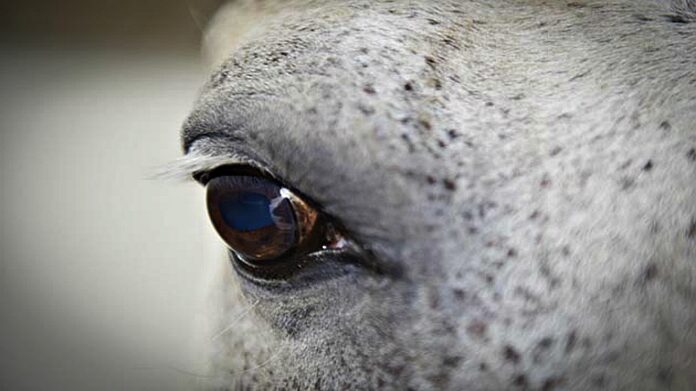

If you’re a horse owner with a senior equine companion, here’s something that might surprise you: your beloved horse could be dealing with significant eye problems, and you might not even know it.
A groundbreaking study led by researcher Fernando Malalana and funded by the University of Queensland has uncovered a troubling gap between what’s actually happening in our older horses’ eyes and what we’re catching at home. The findings? They’re eye-opening—pun intended!
The Startling Statistics
When researchers conducted full ophthalmic examinations on 327 horses aged 15 and older, the results were striking: 87.8% showed signs of ocular disease. That’s nearly nine out of every ten senior horses!
But here’s where it gets really concerning: only 3.3% of the horses’ owners reported knowing about any eye issues. This massive disconnect between clinical findings and owner awareness reveals a critical blind spot (forgive us again) in senior horse care.
What Eye Problems Are We Missing?
Let’s break down what the 287 horses with abnormal findings actually had:
- Cataracts: About one-third of the horses examined had cataracts in at least one eye. These cloudy lens formations are common in aging horses.
- Corneal Issues: Nearly 14% had corneal lesions. While many had healed, scarring remained that could affect vision or cause discomfort.
- Deep Eye Problems: Almost 85% had posterior segment lesions—those tricky issues deep within the eye involving the retina and/or optic nerve.
The Good News (Sort Of)
Before you panic, there’s a silver lining: Malalana noted that most of these lesions don’t significantly impact vision. When researchers tested actual vision loss using the menace response (the horse’s natural blink reaction to an approaching hand), fewer than 6% of horses showed reduced vision during clinical examination.
That’s encouraging! Most senior horses are living comfortably with these eye conditions without major vision problems.
But Here’s the Real Problem…
The discrepancy becomes truly concerning when you look at horses with actual vision problems. Only 1.1% of owners reported vision issues in their horses—and shockingly, most of those cases weren’t even among the horses clinically identified with vision loss.
This means that horses who genuinely needed attention weren’t getting reported by their owners. The horses showing real clinical signs of vision problems? Their handlers had no idea.
What This Means for Your Senior Horse
As passionate horse lovers, we need to take this research seriously. Your senior horse might be dealing with eye problems that aren’t affecting their daily lives—yet. But early detection by a professional equine veterinarian is crucial for:
- Monitoring disease progression
- Catching emerging problems before they impact vision
- Ensuring your horse’s comfort and well-being
- Adjusting their environment if needed (good lighting, careful placement of jumps, etc.)
The Bottom Line
If your horse is 15 years or older and you haven’t scheduled a professional eye examination recently, now’s the time to make that call. Don’t wait for obvious signs of vision problems—by then, it may be too late to address them effectively.
Your veterinarian has the tools and expertise to spot what we casual observers miss. With so many senior horses silently dealing with eye issues, a comprehensive eye exam isn’t just a nice-to-have—it’s an essential part of responsible senior horse care.
Your horse’s vision matters. Schedule that exam today.