

Imagine being told you’re holding three times tighter than necessary. That’s exactly what new research from Germany is revealing about how we ride our horses—and it’s a wake-up call for the entire equestrian community.
A pilot study conducted by Lara Piccolo and Kathrin Kienapfel at the Ruhr-Universität Bochum has uncovered fascinating insights into rein tension and horse behavior. When given the choice, horses naturally prefer around 1kg of rein contact. But here’s the surprising part: when riders are in the saddle, they typically apply three times that amount—approximately 3kg—to achieve the same “dressage frame.”
What the Research Actually Measured
The researchers wanted to answer two critical questions: Are riders or horses responsible for rein tension? And what’s the maximum level a horse will willingly maintain?
The study examined 13 horses with established basic training across walk, trot, and canter. Each horse was tested both on the lunge line without a rider and under saddle with their regular riders. They wore customized “Animon” rein tension sensors while researchers filmed their behavior for detailed analysis using an ethogram—essentially a dictionary of horse body language.
The Stress Response is Real
The results were striking. Horses without riders voluntarily adopted the lightest, most comfortable rein tension. But the moment a rider mounted, the conflict behaviors skyrocketed.
Stress indicators appeared five times more frequently under saddle compared to lunging. These behaviors included:
- Tail swishing
- Bucking and rearing
- Unusual oral behaviors (tongue chewing, teeth grinding)
- Laid-back ears
- “Going against the reins”

What This Means for Your Horse’s Learning
The researchers made an important connection: a horse’s ability to learn is directly tied to their mental state. When excessive pressure on the tongue and jaw causes anxiety, it creates what’s known as a “learning block.”
“A stimulus via the reins should be given with the lowest possible amount of tension, followed by an immediate release after the desired reaction has been achieved,” the authors explained. This approach—minimal tension with immediate release—creates the ideal learning environment.
Think about it: are you accidentally preventing your horse from learning by holding too much tension?
The Good News: You Can Maintain Frame Lightly
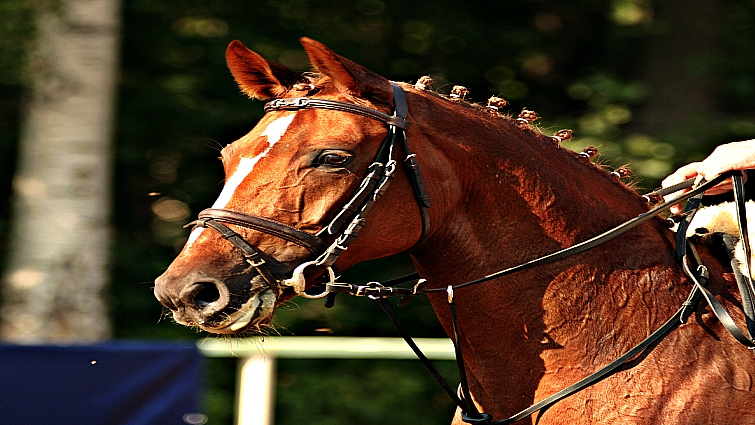
Here’s the encouraging finding: maintaining proper dressage position—with the nose on or slightly in front of the vertical—doesn’t require the high rein tension many riders use. It’s entirely possible to achieve the correct outline with lighter, more moderate rein contact.
While other factors like saddle fit, rider position, and training method certainly affect your horse’s comfort, this research suggests that even small improvements in rein tension management can significantly reduce stress and discomfort.
Rethinking Your Riding Approach
This isn’t about blame—it’s about understanding. Many riders have learned to maintain consistent contact without realizing how much tension they’re actually applying. The good news? This is completely adjustable.
Start by becoming aware of your hand position and tension level. Ask your instructor to help you find the minimum effective contact. Practice giving releases as soon as your horse responds. You might be amazed at how much lighter you can ride while still achieving beautiful, consistent results.
Your horse will thank you with improved focus, better learning, and fewer stress behaviors. And honestly, that’s what we all want—a willing, happy partner who trusts us completely.