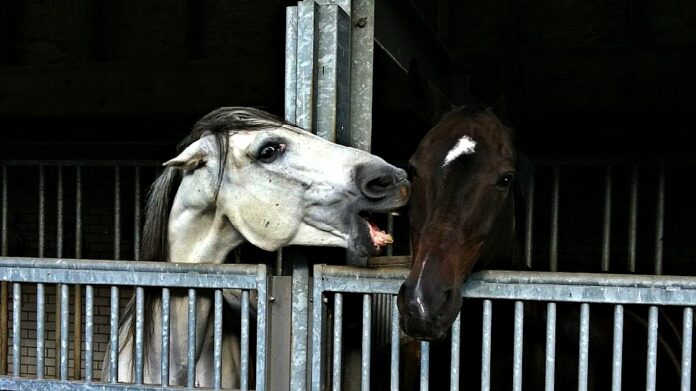

If you’ve noticed your horse pinning their ears and snapping at passersby in the barn aisle, you’re not alone. Stall aggression is a common behavior issue that many horse owners face, but the good news? It’s often manageable once you understand what’s driving it. Let’s explore the root causes of this behavior and discover practical solutions to keep your horse—and everyone around them—safe and happy.
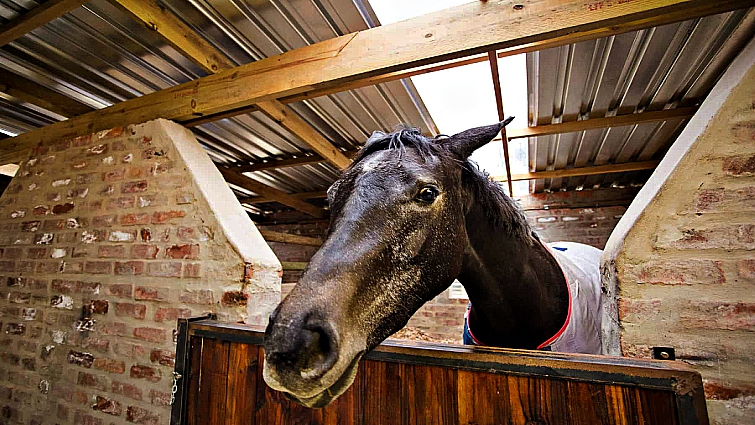
Why Do Horses Display Stall Aggression?
Understanding the “why” behind your horse’s grumpy behavior is the first step toward solving it. Several factors can contribute to stall aggression, and often it’s a combination of them working together.
Proximity Creates Perceived Threat
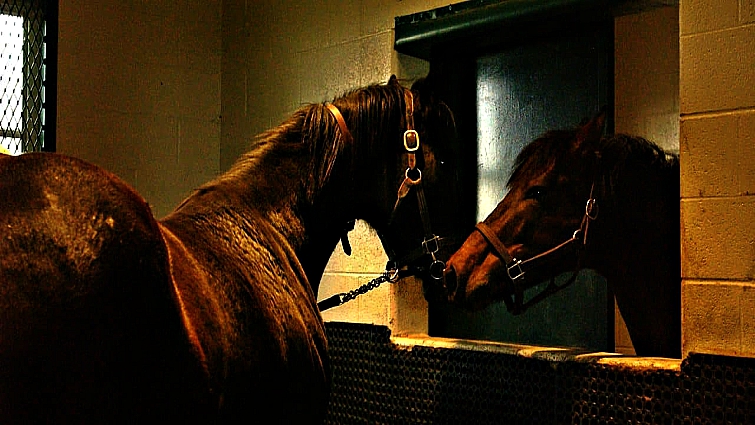
When other horses walk past your horse’s stall, they’re invading their personal space. In the horse’s mind, closer proximity equals greater threat. Unlike in a pasture where horses have room to move away, the barn aisle confines both the stalled horse and the passing horse, creating an uncomfortable situation that naturally triggers defensive behavior.
Resource Guarding Over Valuable Food
Your horse receives meals in their stall—hay, grain, treats. Food is a precious, dependable resource in a horse’s world, and many horses naturally become protective over it. This territorial instinct can manifest as aggression when other horses come near their “feeding area.”
Reinforced Through Accidental Success
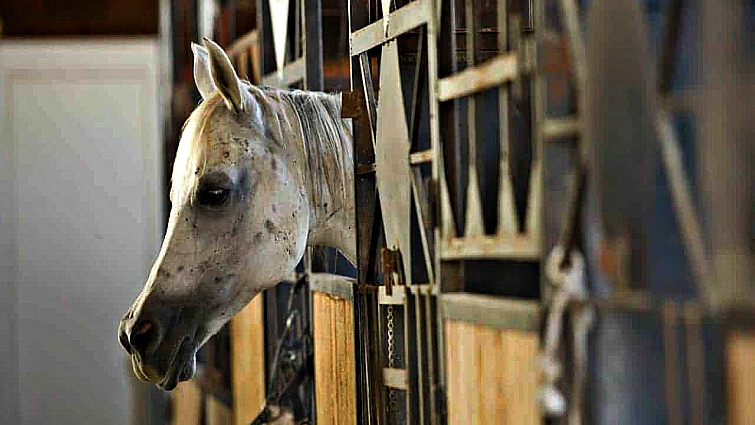
Here’s where behavior becomes a self-fulfilling cycle: when your horse pins their ears and displays aggressive body language, the other horse retreats. Every single time this happens, your horse learns that aggression works! This reinforcement is powerful—behavioral scientists have documented that horses can develop superstitious aggressive behaviors through this kind of unintended negative reinforcement. Once the pattern is established, it’s likely to persist and even escalate.
Age-Related Discomfort
Don’t overlook the physical component. In older horses—especially those 20+ years—arthritis, muscular stiffness, and general soreness can significantly reduce comfort and mobility. A 24-year-old mare, for example, might display increasing grumpiness toward passing horses because her body simply hurts. When other horses approach, she’s in pain and responds defensively. Addressing the underlying pain may resolve much of the behavioral issue.
Solutions to Reduce Stall Aggression
1. Rule Out Medical Issues First
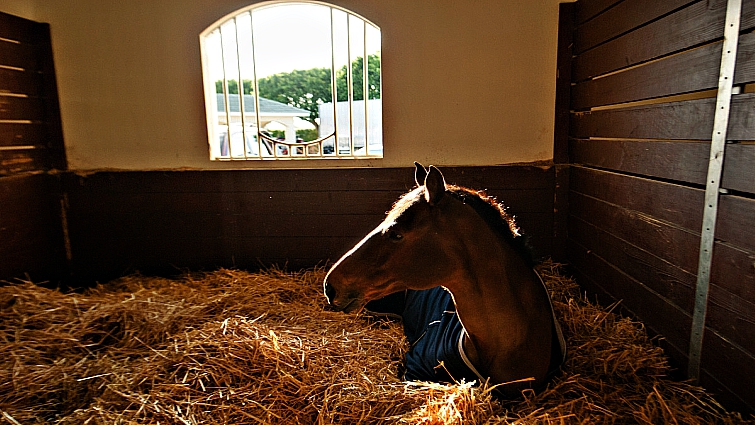
Schedule a veterinary examination to identify any physical conditions contributing to your horse’s aggression. Your vet can assess for arthritis, dental problems, ulcers, or other sources of discomfort that might be making your horse irritable and defensive. Once these issues are treated, behavioral changes often follow naturally.
2. Modify Resource Guarding Behaviors
If you suspect food-related aggression, restructure your feeding strategy:
- Provide 24/7 hay access: When hay is always available, it becomes less valuable and worth defending.
- Spread food around: Use multiple haynets positioned in different areas of the stall rather than one central location.
- Try puzzle feeders: Grain fed through a puzzle feeder (like a Nose-It!) keeps your horse mentally engaged while reducing the intensity of resource guarding.
3. Use Positive Reinforcement Training
The most effective long-term solution involves teaching your horse a new association. Instead of aggression bringing the desired result (making other horses leave), train your horse to expect something pleasant when other horses pass by. This might include:
- Treating your horse with high-value rewards when calm during barn traffic
- Having someone consistently reward your horse while another handler walks a different horse past the stall
- Gradually building confidence that passing horses = good things happen
This positive approach takes patience and consistency, but it works because it literally changes what your horse’s brain associates with that trigger. Over time, your horse learns that calm behavior is far more rewarding than aggression.
Moving Forward
Stall aggression might seem like a stubborn behavior problem, but it’s actually quite logical from your horse’s perspective. They’re protecting resources, maintaining distance, or responding to physical discomfort. By addressing the underlying causes—medical issues, resource management, and behavioral retraining—you can significantly improve your horse’s temperament and create a safer, happier barn environment for everyone.
Remember, changing ingrained behaviors takes time. Work with your veterinarian and consider consulting an equine behaviorist if aggression is severe. With patience and the right approach, even the grumpiest stall horse can learn to be a better neighbor.