

Horses have been central to Romanian life for centuries, and they still are today. In rural areas across Romania, these incredible animals remain essential for agriculture and transportation, offering an affordable alternative to vehicles for families and farmers with limited resources.
According to recent surveys, Romania’s agricultural sector still relies on approximately 760,000 working horses. That’s a staggering number that highlights just how important these creatures are to the nation’s economy and way of life. Yet, this dependency hasn’t always translated into the kind, respectful treatment these animals deserve.
Over the years, equestrian enthusiasts from around the world have voiced serious concerns about horse care practices in certain regions. Today, we’re examining a particularly controversial video that sparked heated debate within the equestrian community. We’ll walk you through what we observed and invite you to share your own thoughts on the handler’s methods.
Breaking Down the Video: What Went Wrong

After careful review, several troubling elements stand out in this footage:
- Dangerous Road Positioning: The horses were tethered together on short leads alongside what appears to be a busy road. This positioning puts them at serious risk from passing traffic and creates unnecessary stress.
- Improper Leading Technique: The handler stood directly in front of both horses, pulling them toward him rather than using proper leading positions that horses naturally understand and respect.
- Lack of Clear Communication: His body language and approach didn’t effectively communicate what he wanted the horses to do, leading to confusion and resistance from the animals.
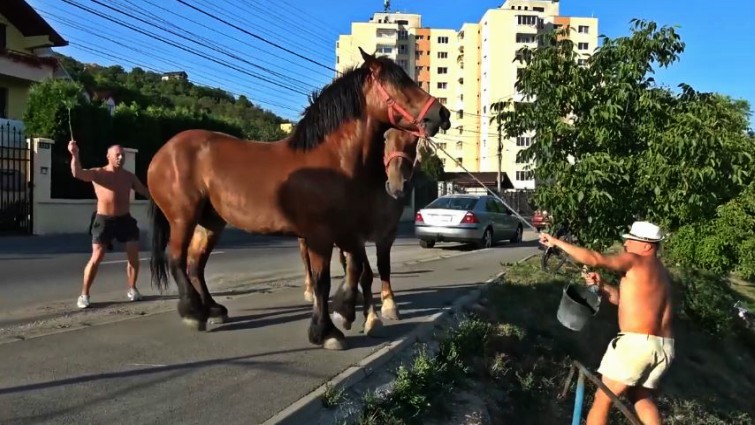
What’s particularly concerning is that despite their obvious reluctance and agitation, the handler persisted with the same ineffective method. While fortunately no injuries occurred during this incident, the approach demonstrates a fundamental misunderstanding of equine behavior and communication.
How Horses Should Be Led to Water
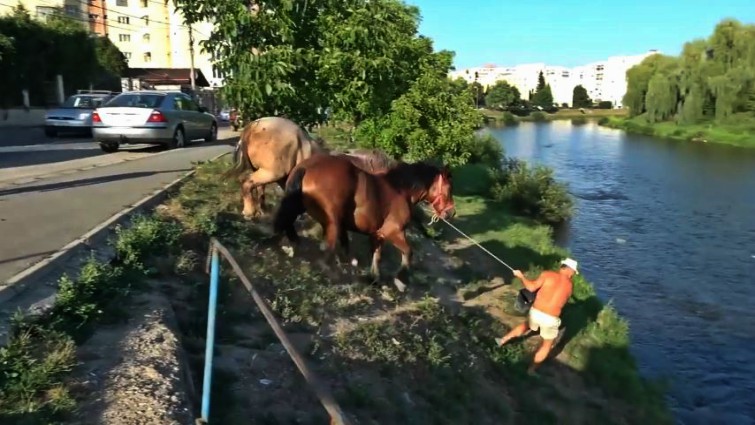
Experienced handlers know that horses respond best to calm, confident leadership. When leading horses—especially to water or unfamiliar situations—handlers should:
- Position themselves alongside the horse’s shoulder, not directly in front
- Use gentle, consistent pressure combined with clear verbal cues
- Allow the horse time to understand and respond to requests
- Never force or intimidate; instead, encourage and guide
- Ensure the environment is safe and free from distractions
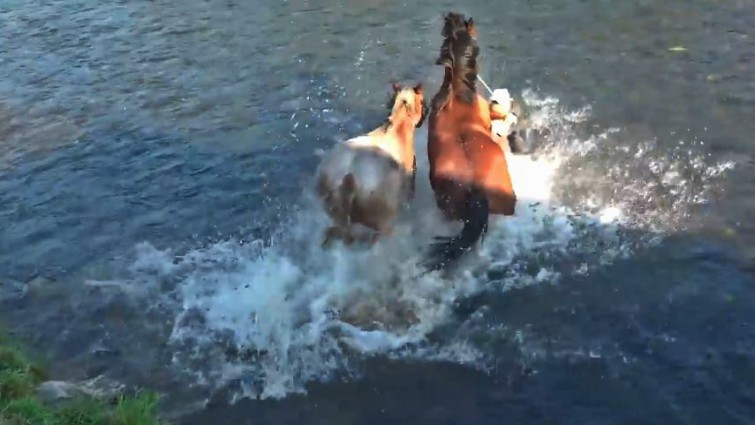
Horses are prey animals by nature, which means they respond to fear and pressure by resisting. The anger and reluctance shown in this video were clear signs that the horses didn’t understand what was expected of them and felt threatened by the approach.
The Bigger Picture: Horse Welfare in Agriculture
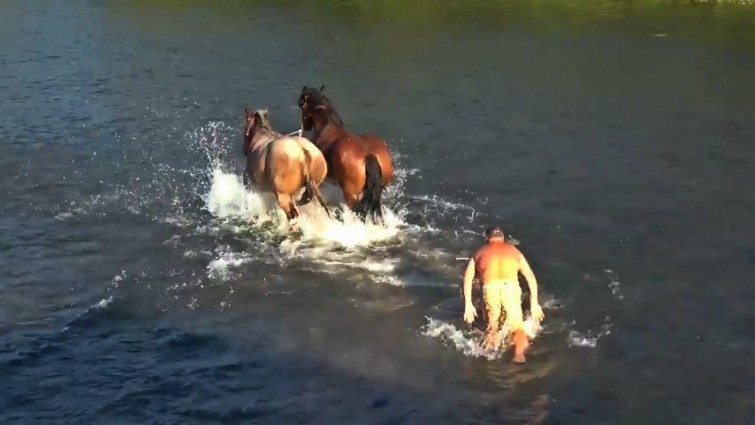
While Romania’s reliance on working horses is economically understandable, it’s crucial that owners and handlers receive proper education in equine care and humane handling techniques. Organizations dedicated to horse welfare have made significant efforts to provide training and resources, but much work remains.
Every horse deserves to be treated with respect and kindness, whether they’re competing at the highest levels of sport or working in agricultural settings. Their cooperation comes from trust, not fear—and that trust is built through patient, knowledgeable handling.
What Do You Think?
We’d love to hear your thoughts on this incident. Do you see other concerning elements in this handling scenario? Have you witnessed similar situations? Share your perspective in the comments below—let’s start a conversation about better horse care practices for working animals worldwide.
Watch the full video and see the incident for yourself:
https://www.facebook.com/100009699884090/videos/712682322398424/
Remember, every interaction with a horse is an opportunity to reinforce trust or erode it. Let’s champion handling methods that keep both horses and humans safe.