

Have you ever witnessed a horse leap so spectacularly into the air that it appears to defy gravity itself? If so, you’ve likely seen one of equestrian sport’s most breathtaking performances: the airs above the ground. These are advanced classical dressage movements that showcase the extraordinary athleticism and training of elite horses.
What Are Airs Above the Ground?
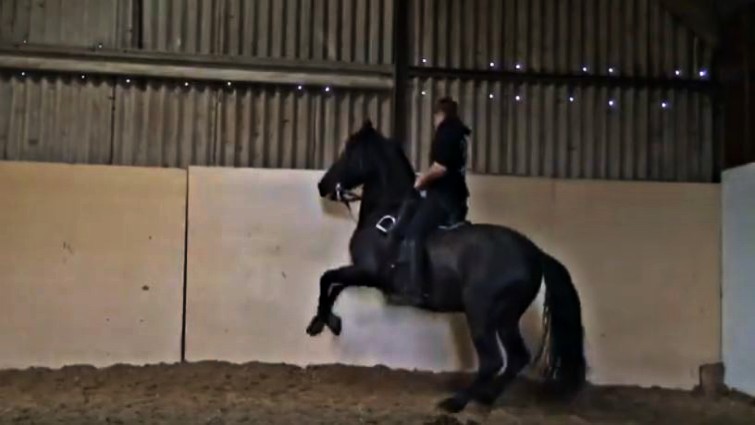
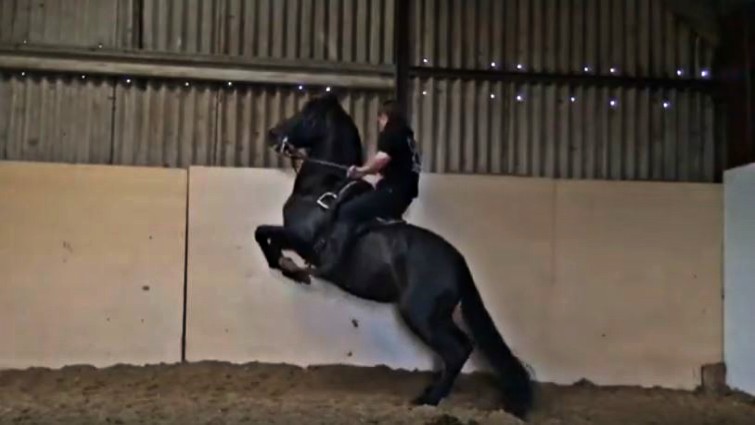
Airs above the ground represent the pinnacle of classical dressage, featuring a collection of high-level movements where the horse literally leaves the ground. These magnificent maneuvers include:
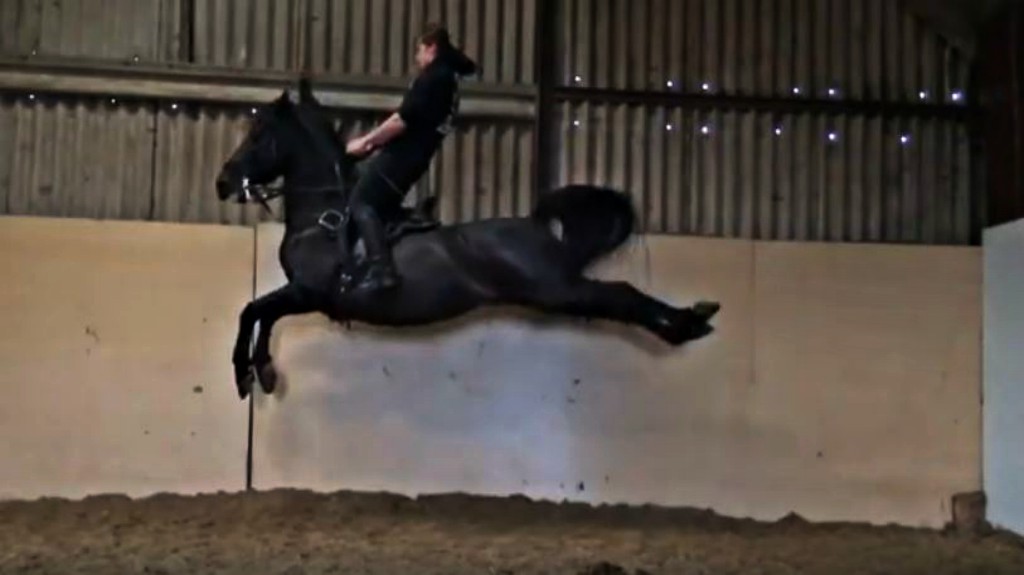
- Capriole – A dramatic leap where the horse kicks out its hind legs while airborne
- Courbette – A series of powerful hops on the hind legs
- Mezair – A graceful forward movement while on the hind legs
- Croupade – A high jump where the horse tucks its hind legs beneath
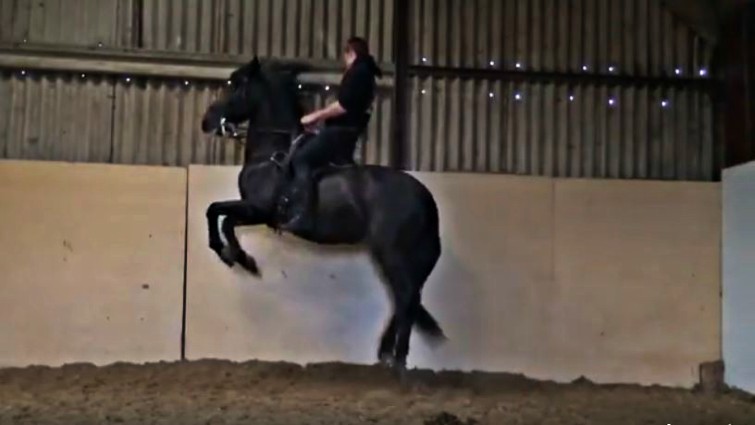
- Levade – An elevated position on the hind legs at a specific angle
Which Breeds Excel at These Movements?
Not all horses can perform airs above the ground—it requires exceptional breeding, conformation, and intensive training. The breeds most frequently trained to execute these demanding movements include:
- Andalusian horses
- Lusitano horses
- Lipizzan stallions
- Menorquín horses
These noble breeds possess the muscular development, particularly in the hindquarters, necessary to execute such complex and physically demanding maneuvers. Their vigorous, naturally adjusted hindquarters provide the explosive power required for these spectacular leaps.
A Fascinating Historical Legacy
The origins of airs above the ground are rooted in military history. These movements were originally developed to train war horses for combat, demonstrating the horse’s ability to execute complex maneuvers under pressure. This military heritage is preserved today through two prestigious riding academies:
- The Spanish Riding School in Vienna – A centuries-old institution famous for its white Lipizzan stallions
- The Cadre Noir in Saumur, France – Another prestigious military-founded academy
Both institutions continue to train and showcase these classical movements, keeping this ancient equestrian art alive for modern audiences.
Training Methods and Welfare
Training horses to perform airs above the ground requires patience, expertise, and a deep commitment to equine welfare. Typically, trainers work on each individual air using long reins and without a rider. This method significantly reduces the physical strain on the horse during the learning process. Once the horse masters the movement, it’s gradually introduced under saddle until the rider and horse can perform it seamlessly together.

Watch the Magic in Action
The video below showcases an absolutely stunning black stallion demonstrating these incredible movements. While we’re not entirely certain of his breed, his striking black coat and powerful physique suggest he may be a Lipizzan stallion. Interestingly, Lipizzans are born dark and gradually transition to their famous white color as they mature—a remarkable transformation that makes young Lipizzans unmistakable in the arena.
Prepare to be amazed as this magnificent horse literally soars through the air!
The Legacy Continues
Airs above the ground represent far more than impressive athletic feats—they’re a living connection to centuries of equestrian tradition and mastery. Every time a horse performs these movements, we witness the culmination of generations of knowledge, training expertise, and the remarkable partnership between horse and rider. Whether you’re an equestrian enthusiast or simply captivated by these majestic animals, watching airs above the ground is an unforgettable experience that reminds us why horses have captured human imagination for millennia.