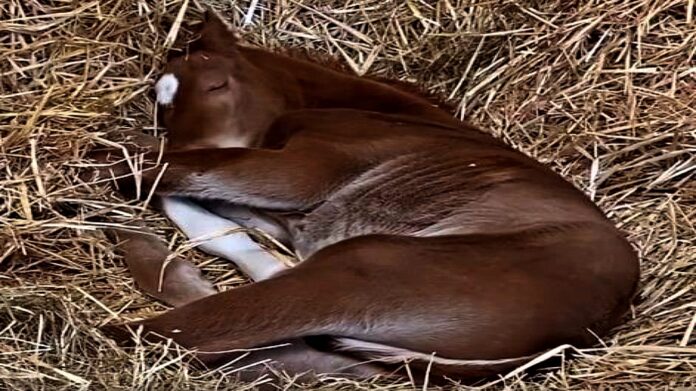

There’s something truly magical about watching a foal sleep. If you’re a horse owner, you know that peaceful moment when your young horse drifts off is pure gold. But beyond the cuteness factor, understanding how horses sleep is actually crucial to their overall health and well-being. Let’s explore what makes equine sleep patterns so unique—and why your foals need those adorable nap sessions!
How Horse Sleep Differs From Human Sleep
While we humans can snooze for a solid 8 hours straight, horses have a completely different sleep schedule. Your horse isn’t lazy when they’re catching quick naps throughout the day—they’re actually following their natural instincts!
Here’s the fascinating part: Adult horses only need about 3 hours of total sleep every 24 hours. But that sleep comes in short bursts rather than one long session. Horses are prey animals, so evolution designed them to rest lightly and frequently, staying alert to potential threats in their environment.
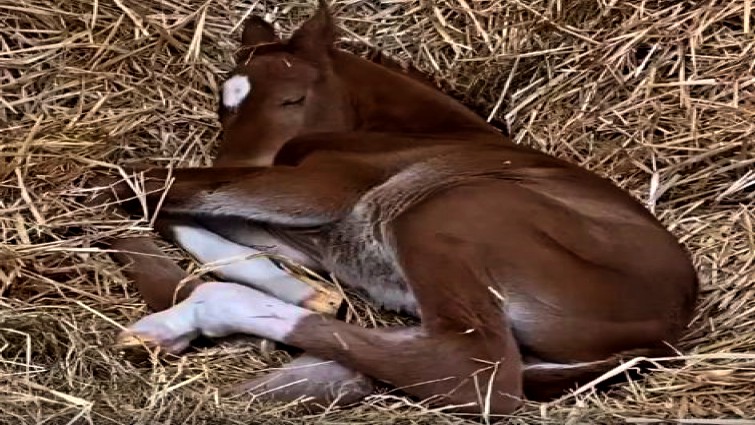
Foals Sleep A LOT (And It’s Normal!)
If your foal seems to spend half the day sleeping, don’t worry—that’s exactly what they’re supposed to do! Young foals under three months old sleep dramatically more than adults, logging up to 12 hours daily. This is when their bodies are growing rapidly, and all that rest is essential for development.
As foals mature, their sleep patterns gradually shift. They’ll start spending more time resting in a standing position and less time lying down for deep sleep. By the time they reach adulthood, they’ve adopted the efficient “power nap” schedule of older horses.
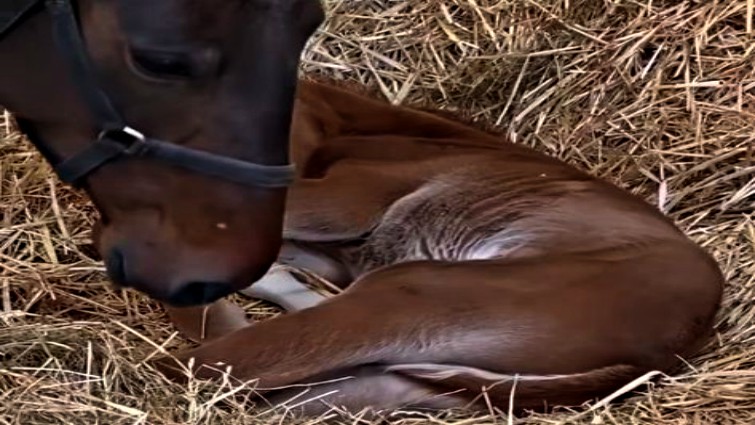
Why Horses Need to Lie Down
While horses can rest and doze standing up (thanks to their unique stay apparatus), they must lie down to achieve genuine REM sleep. This deep sleep is non-negotiable for their physical and mental health. That’s why providing horses with adequate space to lie down safely is critical.
Stabled horses especially need opportunities to stretch out. Confining a horse to a stall without turnout can prevent them from getting the restorative sleep they need. Creating an environment that supports natural behavior—like pasture turnout or large stalls with good footing—makes all the difference.
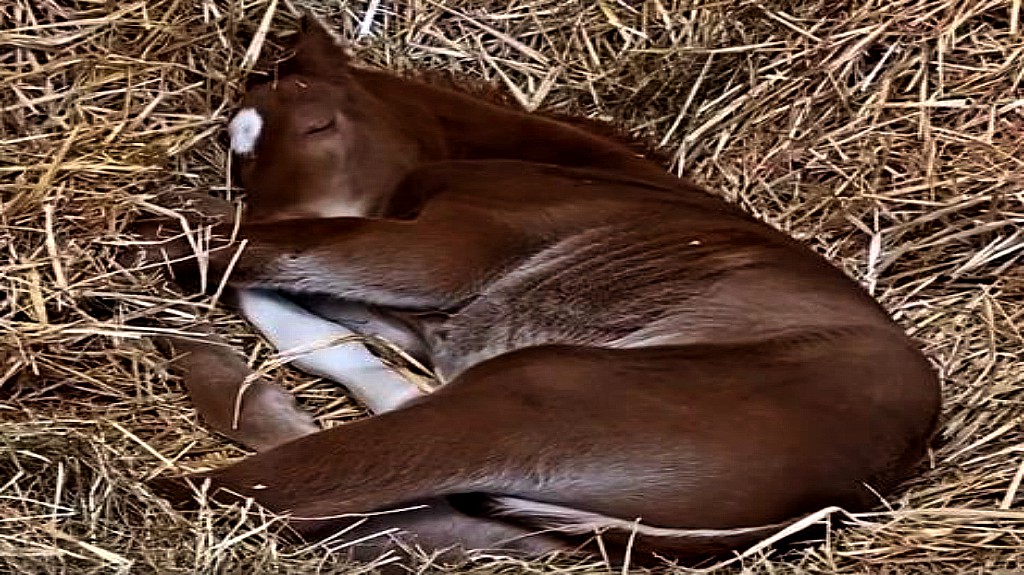
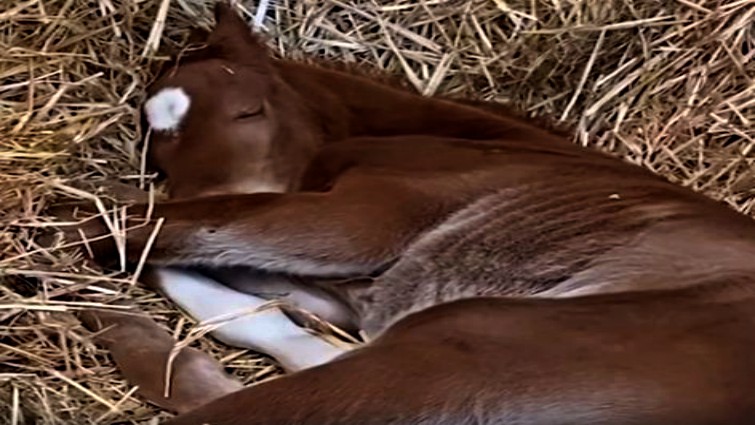
Watch This Precious Foal Sleep
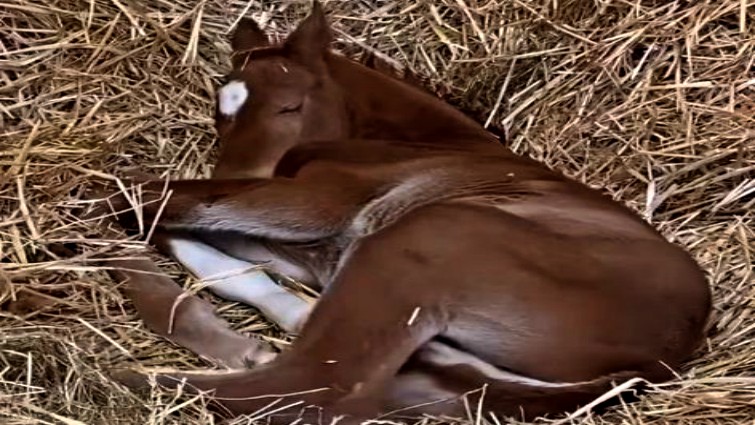
Nothing melts your heart quite like watching a foal in dreamland. Check out this adorable video of a foal sleeping peacefully:
Tips for Supporting Healthy Horse Sleep
Want to ensure your horses get quality rest? Here are some practical strategies:
- Provide daily turnout: Pasture time lets horses lie down safely on natural footing
- Use deep bedding: Soft, clean bedding in stalls encourages lying down
- Maintain a quiet environment: Horses sleep better without constant noise and disturbance
- Ensure consistent routines: Predictable schedules help horses feel secure
- Check for pain or illness: Horses that won’t lie down might have underlying health issues
The Bottom Line
That adorable foal sleeping soundly isn’t just cute—they’re doing essential work for their growing body and developing mind. Every nap counts! By understanding equine sleep patterns and creating an environment that supports natural rest, you’re giving your horses the gift of genuine health and happiness.
So next time you catch your foal dozing off, take a moment to appreciate what you’re seeing: a young horse doing exactly what nature intended. And if you need a mood boost, that precious video will definitely deliver the smiles!