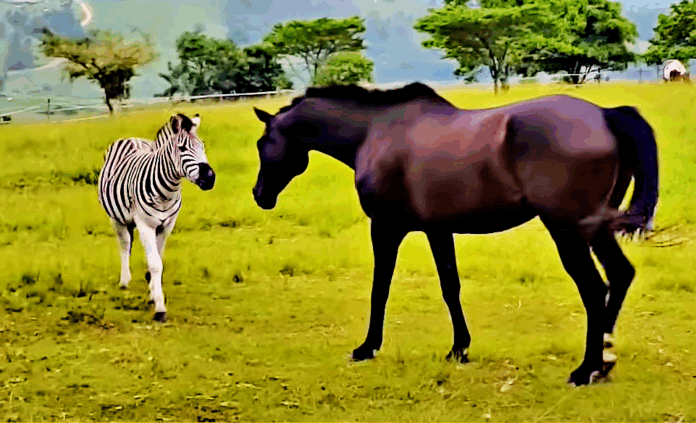

Horses and zebras might look like distant cousins at first glance, but they’re actually pretty close relatives in the animal kingdom! Both belong to the Equidae family, and watching them interact—whether playing together or engaging in those hilarious frisky “fights”—reveals just how much they have in common. Let’s dive into what makes these amazing creatures so similar, yet so wonderfully different.
What Do Horses and Zebras Have in Common?
It’s easy to spot the family resemblance when you know what to look for. Both horses and zebras are herbivorous mammals with hoofed feet perfectly designed for sprinting across all kinds of terrain. They’re both herd animals too, which means they’re naturally social creatures who stick together for safety and companionship. This instinct is part of their survival strategy against predators in the wild.
Physically, these equine cousins share quite a bit: similar teeth structure, long heads, and those iconic manes we all love. These shared traits tell us they evolved from common ancestors and developed similar adaptations for speed and social living—two traits absolutely essential for their survival in the wild.
What Makes Them Different?
Here’s where things get interesting! Despite their similarities, zebras and horses have evolved some pretty distinct differences. Zebras are generally smaller and lighter than horses, with physical features perfectly adapted to African habitats. Check out these cool zebra traits:
- Ears: Larger and more rounded, giving them incredible sensory perception
- Tail: Features a distinctive tuft of hair at the end (very different from horses’ full, flowing tails)
- Mane: Shorter and stands straight up, creating that spiky look we recognize instantly
- Personality: Known for being skittish and feisty when cornered—these wild instincts help them escape predators
When it comes to domestication, the differences become even more apparent. Horses have been working alongside humans for thousands of years, serving as transportation, companions, and partners in sport. Zebras, on the other hand, have stubbornly resisted domestication! Their smaller size, limited back strength, and independent nature make them poor riding candidates. While some brave (or crazy!) people have attempted short zebra rides, these animals remain proudly wild, roaming the savannas, grasslands, woodlands, and mountains of Africa.
Speed and Survival Strategies
Both species are fast, but horses have the edge: they can reach speeds up to 54.7 miles per hour, while zebras top out around 40 mph. But don’t count zebras out! They’ve got a secret weapon—they run in zigzag patterns to confuse and evade predators. It’s a brilliant adaptation to life in Africa’s predator-packed environments.
Interestingly, horses and zebras can actually interbreed, producing sterile offspring with fascinating names like “zorses,” “horbras,” and “zonies.” It’s nature’s way of showing just how closely related these species really are!
Watch Them in Action!
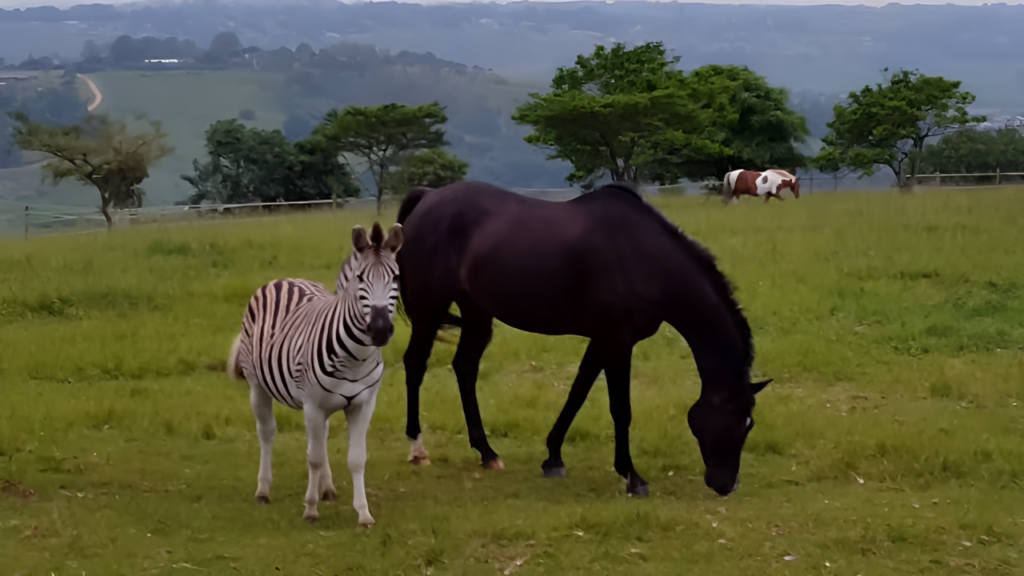
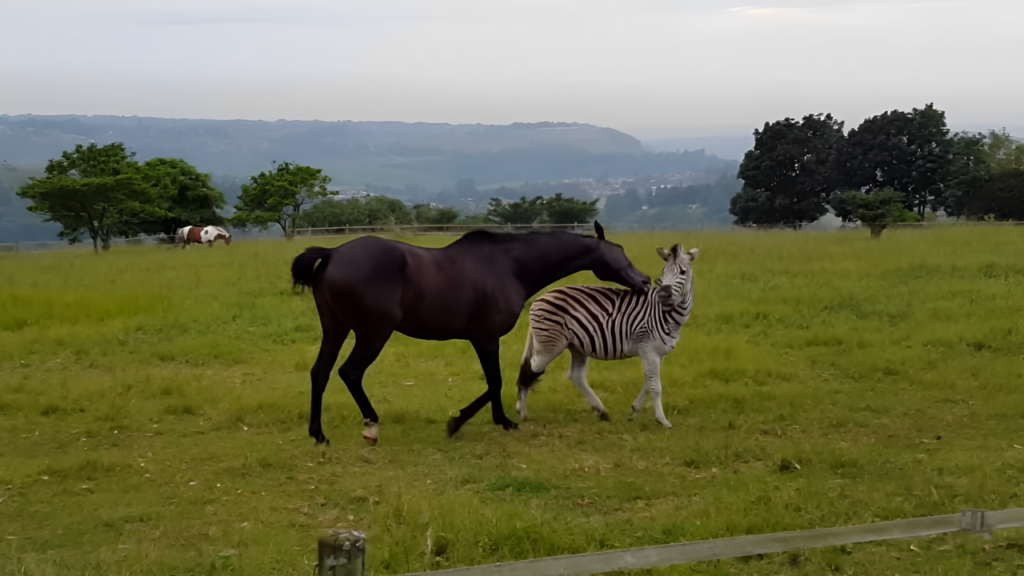
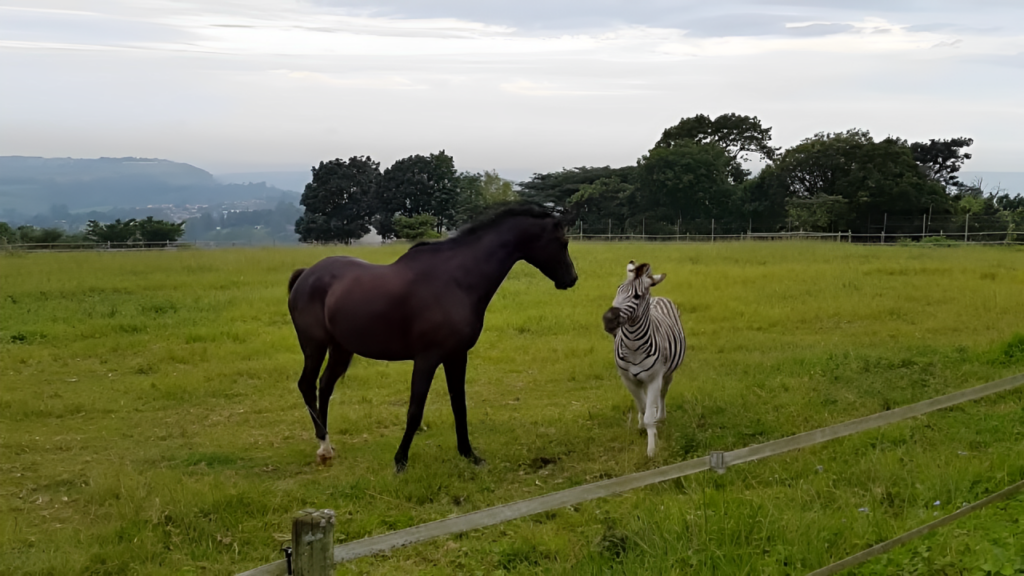
Want to see horses and zebras interacting in real time? Check out this amazing video showcasing their playful bond:
The Bottom Line
Whether they’re playing peacefully or engaging in those hilarious mock fights, horses and zebras remind us that nature’s equine family is incredibly diverse. From their shared evolutionary heritage to their specialized adaptations for different environments, these magnificent animals showcase the beautiful complexity of the natural world. Their interactions are a testament to the bonds that can form between related species—and honestly, they’re just plain fun to watch!