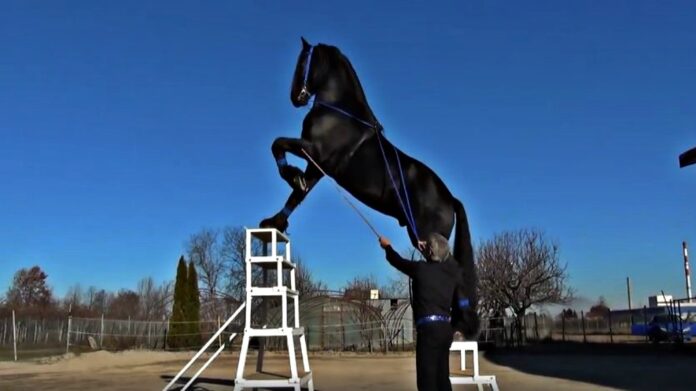

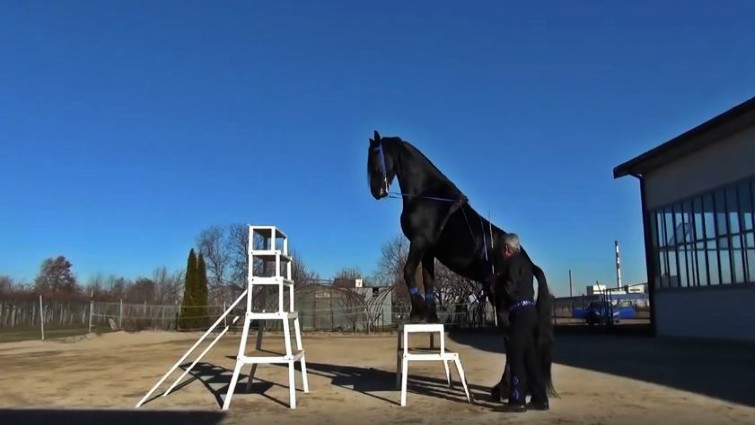
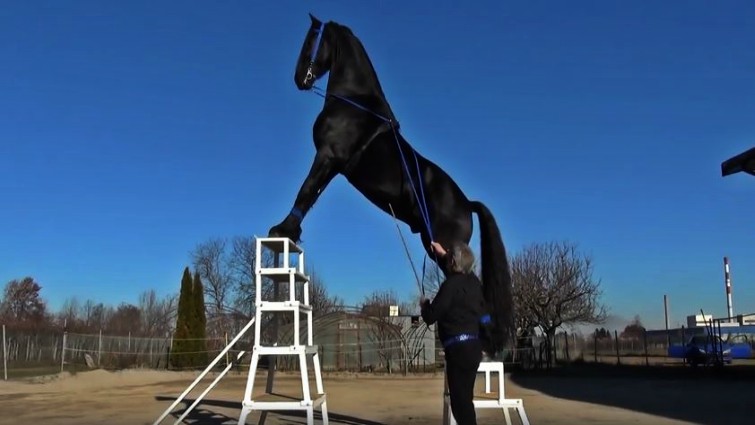
A stunning video of a horse climbing a ladder has taken the internet by storm—and sparked an intense conversation about animal training ethics. The impressive footage shows a skilled equine athlete scaling a ladder under the guidance of an experienced trainer, but the clip has divided viewers into passionate camps on both sides of the debate.
The Safety Concerns: A Valid Perspective
Critics of the video raise legitimate safety concerns. Horses don’t have fingers or hands, which means maintaining balance on a ladder is inherently risky—especially when shifting weight from leg to leg. One miscalculation, one moment of fear, and a fall could result in serious injury or worse. Skeptics argue that encouraging horses to perform unnatural movements contradicts basic equine physiology and common sense welfare practices.
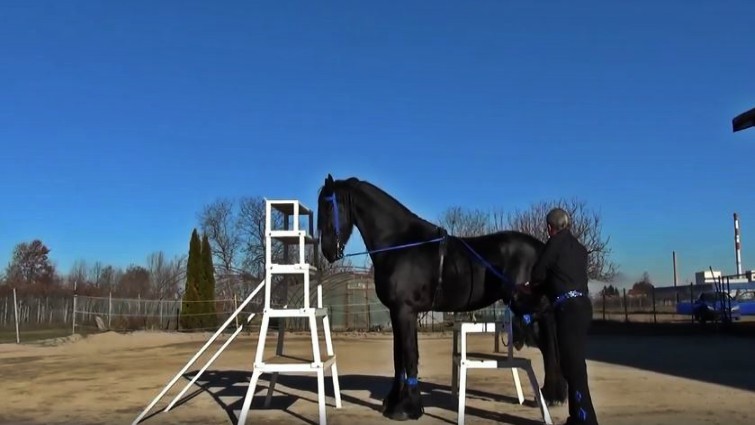
Many animal welfare advocates view this as unnecessary stunt training that prioritizes entertainment over the horse’s well-being. They question whether the risk is ever justified, no matter how impressive the final result.
The Other Side: Training Excellence & Trust
Supporters of this training marvel point to something equally compelling: the extraordinary bond and trust between horse and handler. This isn’t just a trick—it’s a demonstration of advanced horsemanship built on positive reinforcement, patience, and genuine rapport.
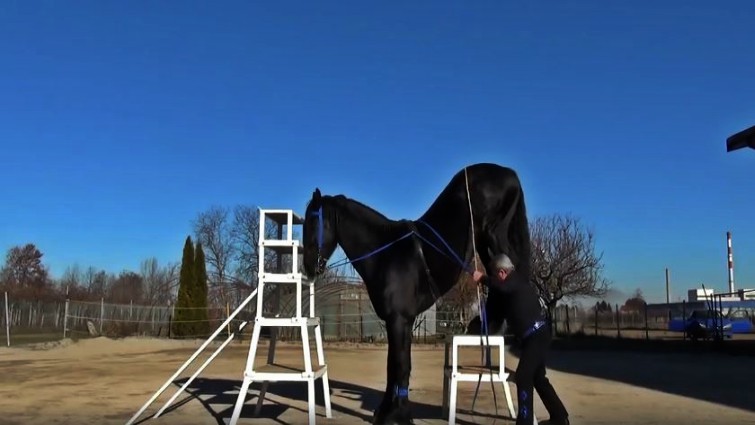
Advocates note that the horse in the video appears calm, confident, and genuinely engaged. Not every horse could—or would—attempt this feat. It takes a special combination of temperament, athleticism, and trust that can only develop through consistent, positive training methods. For many in the equestrian community, this represents the pinnacle of human-horse communication.
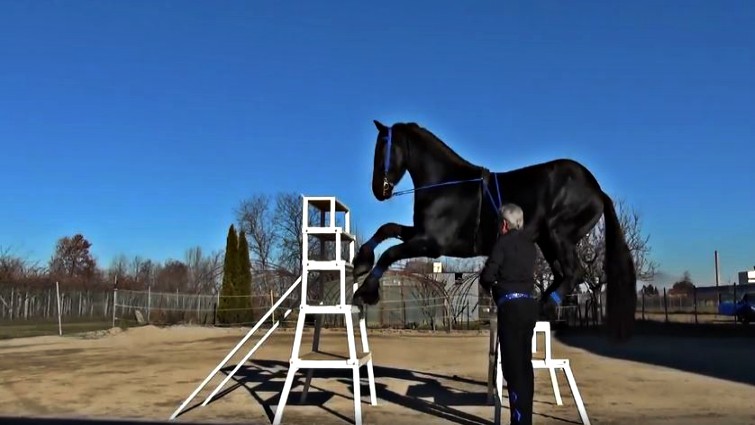
Proponents also argue that learning new and challenging tasks can strengthen the relationship between horse and human, and in some cases, even help rehabilitate horses with behavioral issues. When done ethically with positive reinforcement, these experiences can build confidence in both animal and handler.
Finding Common Ground
So where does the truth lie? Perhaps in recognizing that both perspectives have merit. The key factors in any equine training scenario should always be:
- The horse’s physical and mental well-being comes first
- Positive reinforcement drives the training, never force or punishment
- Proper conditioning ensures the horse is physically prepared
- Clear boundaries exist—the horse should never be pressured beyond its comfort level
What Do You Think?
We want to hear from you! Is this breathtaking display of horsemanship a remarkable achievement in training, or does it cross the line into reckless behavior? Watch the video below and share your thoughts in the comments—let’s keep this important conversation going.
Whether you’re a traditionalist who believes horses should only do what nature intended, or a progressive trainer who sees boundless potential in equine learning, this video reminds us why horses and horsemanship continue to captivate us. Your perspective matters—drop a comment below and join the conversation!