
From Failed Racehorse to Legendary Sire: The Doc Bar Legacy
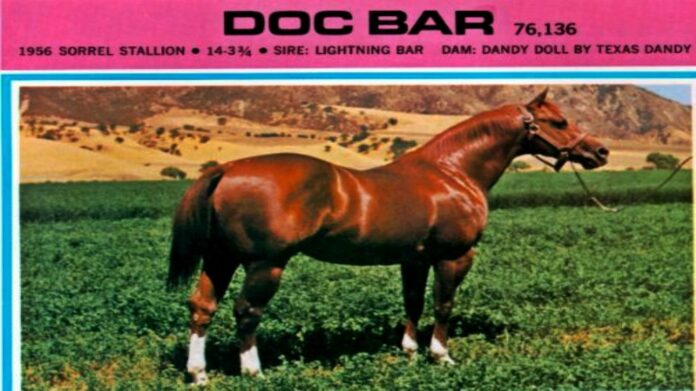
If you’re passionate about equestrian history, you’ve almost certainly heard the remarkable story of Doc Bar—the legendary Quarter Horse whose unexpected path led to one of the most transformative legacies in the breed’s history. Born in 1956, Doc Bar came from impressive bloodlines that promised greatness: his sire was Lightning Bar, a son of the legendary Three Bars, and his dam was Dandy Doll, a daughter of Texas Dandy. With pedigree like that, expectations were sky-high.
When Racing Dreams Become Something Greater
But here’s where Doc Bar’s story takes an unexpected turn. Despite his champion bloodlines, Doc Bar simply wasn’t built for the racetrack. He couldn’t cut it as a racing Quarter Horse—and that’s precisely what made him extraordinary. Rather than fade into obscurity, this “failed” racer would go on to transform an entire breed and cement his place in equestrian history.
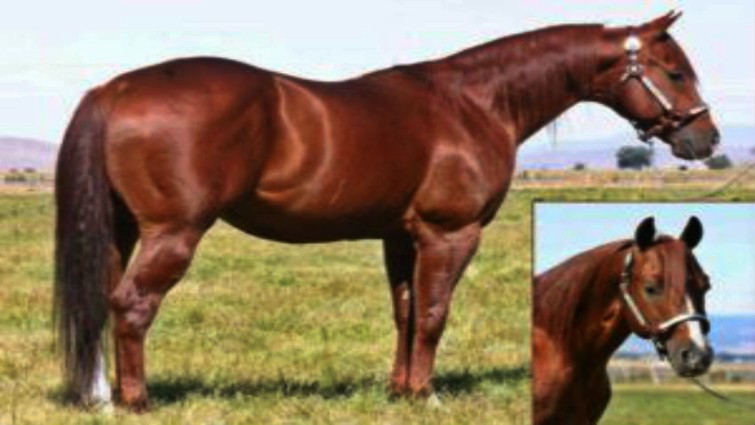
What Doc Bar lacked on the track, he more than made up for elsewhere. His distinctive appearance, strength, and athletic ability made him an exceptional halter horse and cutting horse. During his competition career, Doc Bar captured an impressive 12 first-place victories, including 10 grand and reserve championships. These accolades caught the attention of serious horsemen everywhere.
The Investment That Changed Everything
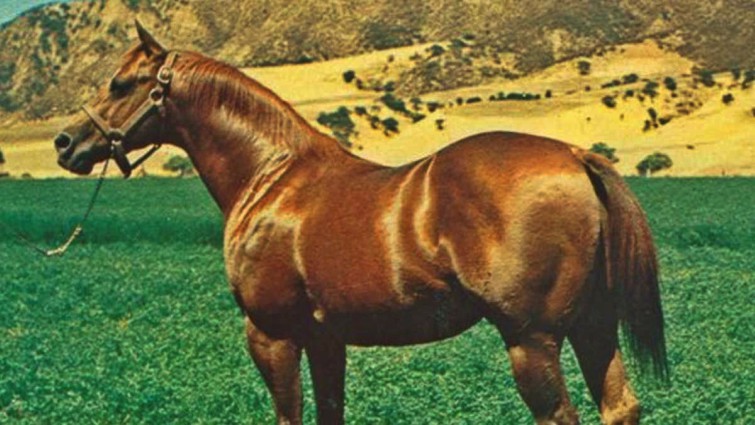
In 1963, Dr. and Mrs. Stephen Jensen of Paicines, California recognized Doc Bar’s true potential and purchased him for $30,000—a significant investment at the time. The Jensens saw what others had missed: the horse’s remarkable energy, strength, and skill suggested he had an even greater destiny as a breeding stallion rather than a racing competitor.
Their decision proved to be one of the wisest in Quarter Horse history. Breeders across the country soon wanted to incorporate Doc Bar’s genetics into their programs. His influence became so sought-after that virtually every serious Quarter Horse breeding operation wanted a piece of the Doc Bar legacy.
An Unparalleled Legacy in Numbers
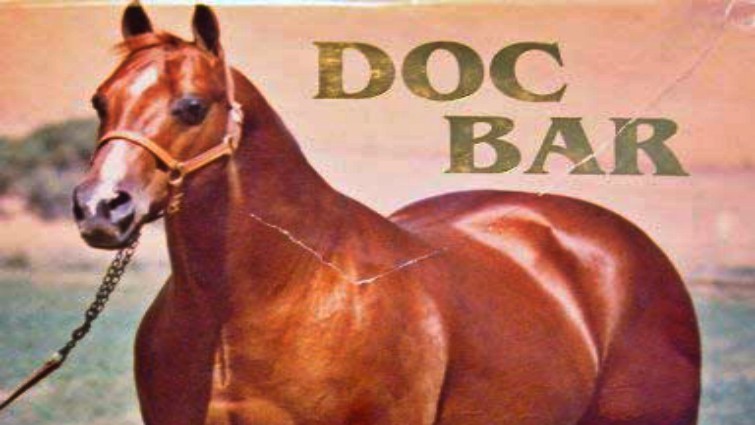
The numbers tell an incredible story. Over his lifetime, Doc Bar sired an astounding 485 foals—a remarkable testament to his influence on the breed. His offspring inherited his distinctive qualities and helped reshape Quarter Horse bloodlines for generations to come. Breeders consistently sought Doc Bar genetics to improve their herds, making him one of the most valuable sires in Quarter Horse history.
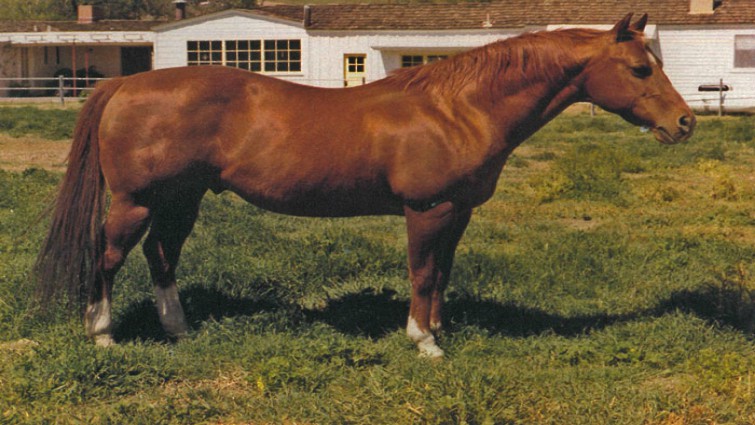
Honoring a Legend
Doc Bar lived to the age of 36, a testament to his robust constitution and the care he received. Upon his passing, the American Quarter Horse Association honored his extraordinary contributions by enlisting him into their hall of fame—a fitting tribute to a horse who had given so much to the breed.
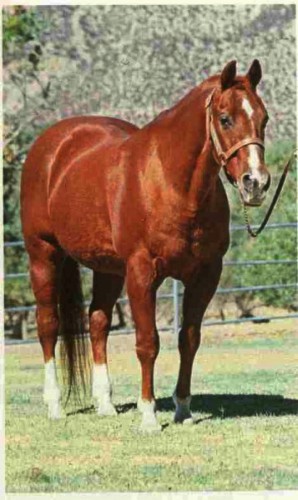
The Lesson Doc Bar Teaches Us
Doc Bar’s journey reminds us of an important truth in both horse breeding and life itself: sometimes what appears to be failure in one arena is simply destiny redirecting us toward something far greater. He couldn’t succeed as a racehorse, but he became one of the most influential sires in Quarter Horse history. His genetics, his presence, and his legacy continue to influence the breed decades after his death.
Doc Bar stands as living proof that greatness isn’t always found where we expect it. Sometimes the most extraordinary achievements come when we embrace our true calling rather than chase someone else’s expectations. For the Quarter Horse breed, Doc Bar’s true calling transformed an entire genetic legacy—and that’s a legacy that will endure for generations to come.