
Training horses is a journey—not a destination you can reach overnight. While countless books, videos, and websites promise quick fixes, the truth is more nuanced. Horse training requires patience, consistency, and a willingness to learn alongside your equine partner. Working with a competent, experienced trainer is genuinely the wisest investment you can make.
The Art and Science of Horse Training
There’s no single “right way” to care for and train a horse. Different disciplines, individual temperaments, and training philosophies all play a role. However, certain fundamental principles should never be compromised—especially when it comes to respecting your horse’s nature and well-being.
Understanding Draft Horse Temperament
Draft horses are among the most gentle, calm, and affectionate equines you’ll ever encounter. Their natural disposition is peaceful and willing. But here’s what many handlers forget: these magnificent animals are also incredibly powerful. That combination demands respect and thoughtful handling.
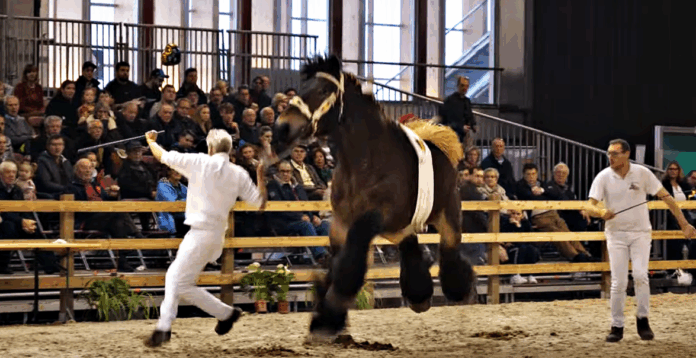
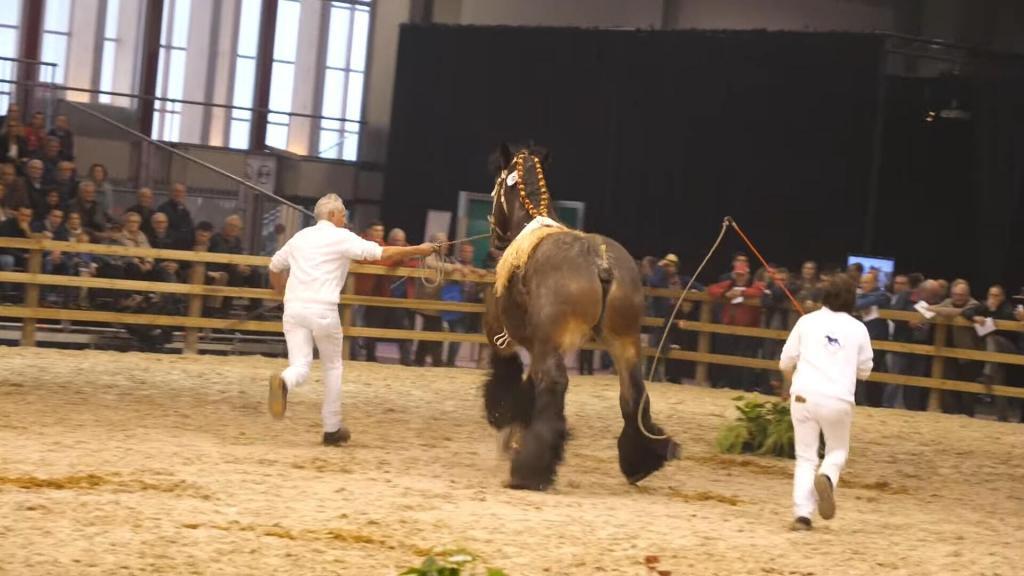
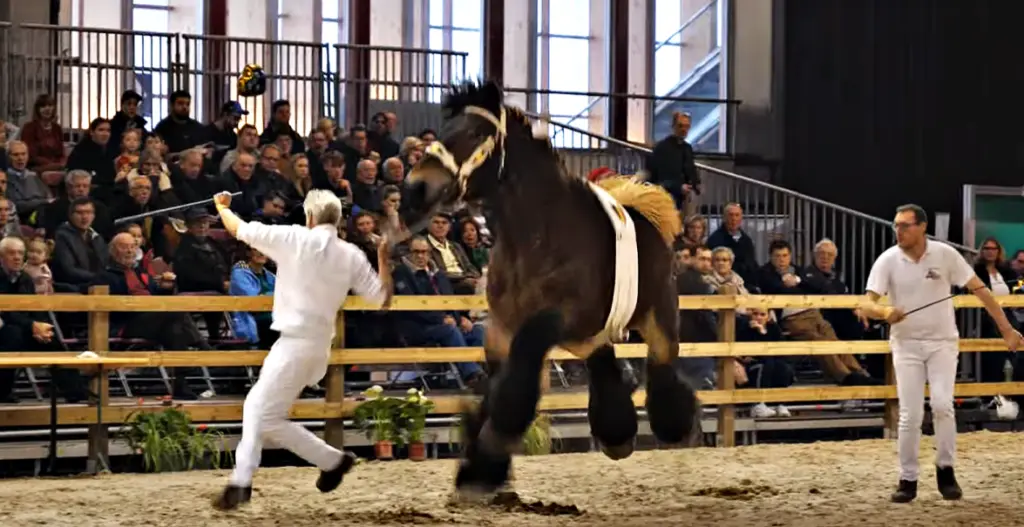
When a draft horse becomes anxious, the solution isn’t more pressure—it’s reassurance. Yet in the video we’re about to share, we see handlers pulling aggressively on the halter and using whips to apply pressure. This approach only amplifies the horse’s stress and triggers an adrenaline response, making the situation worse.
Why Pressure-Based Training Backfires
Here’s a critical insight: punishing unwanted behavior through pulling, rein-snapping, or rope pressure is counterproductive. When you force a horse to lift its head or avoid contact with the bit, you’re not teaching—you’re triggering a reactive response. The horse learns to escape pressure, not to trust or understand your cues.
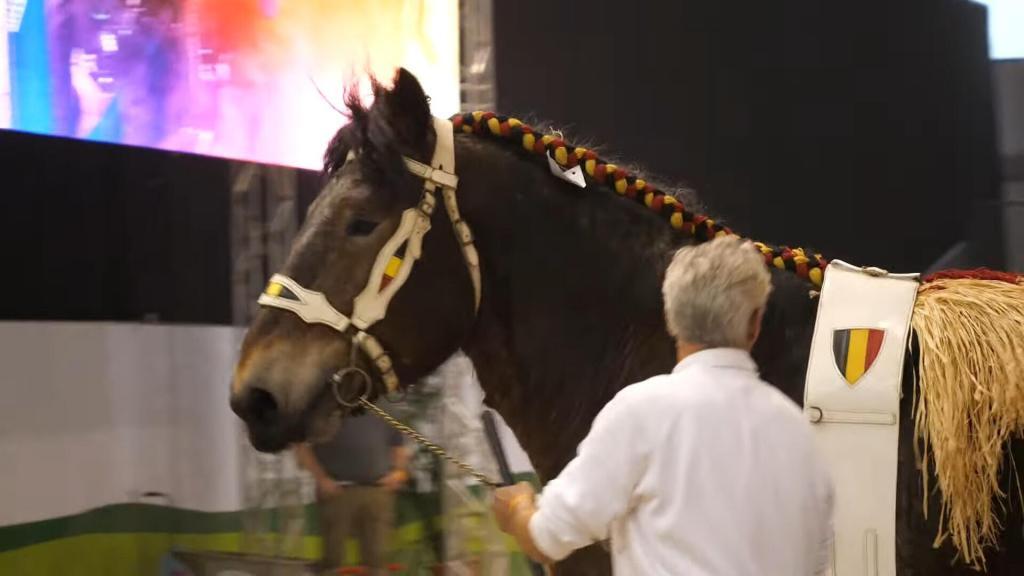
A whip, when used correctly, is a legitimate training tool—an extension of your arm or leg that communicates intent. But it must be applied with finesse, timing, and purpose. Never as punishment.
When Horses “Take Revenge”
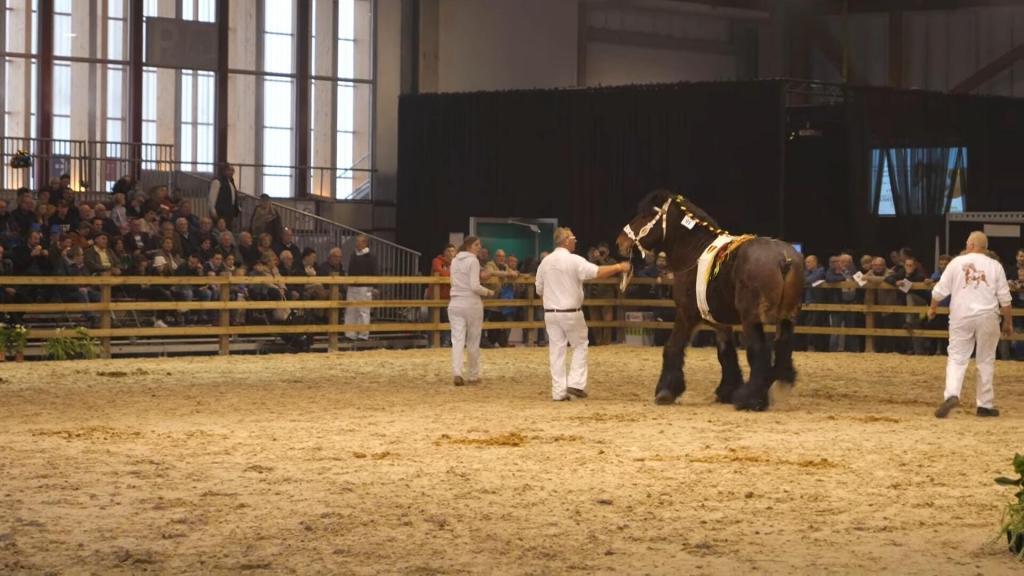
In the video below, you’ll notice something striking: as handlers increase pressure, the draft horse’s behavior deteriorates further. It almost seems like the horse is deliberately sabotaging the show—hence the phrase “taking revenge.” But that’s not what’s happening. The horse is simply responding to stress with escalating anxiety and defensive behavior.
The Better Path Forward
Instead of force, successful handlers build trust through calm consistency, clear communication, and positive reinforcement. Anxious draft horses need their handlers to be steady, confident, and reassuring. They thrive when they understand what’s expected and feel safe attempting to comply.
The next time you work with a draft horse—or any horse—remember: power + gentleness creates champions. Pressure + frustration creates problems.
What Do You Think?
After watching the video above, we’d love to hear your perspective. Do you agree that harsh handling escalates unwanted behavior? Share your training philosophy and experiences in the comments below. Let’s build a community that champions compassionate, effective horsemanship!