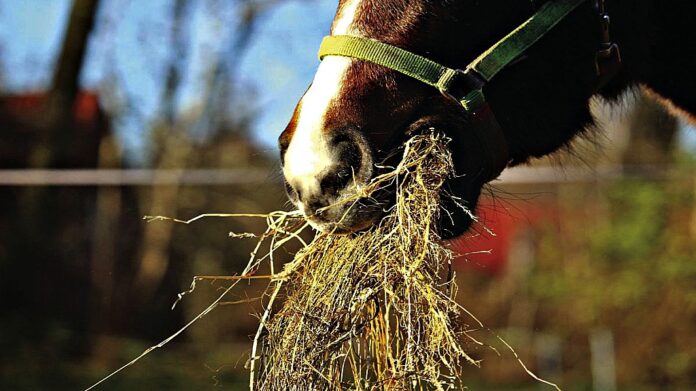

If you’ve ever filled haynets on a dusty day, you know that feeling—the particles floating through the air, coating your clothes, and seemingly endless. But what we can see is just the tip of the iceberg. A student researcher at the Royal Agricultural University has put a spotlight on just how dangerous hay dust really is, and her findings might change how you handle hay forever.
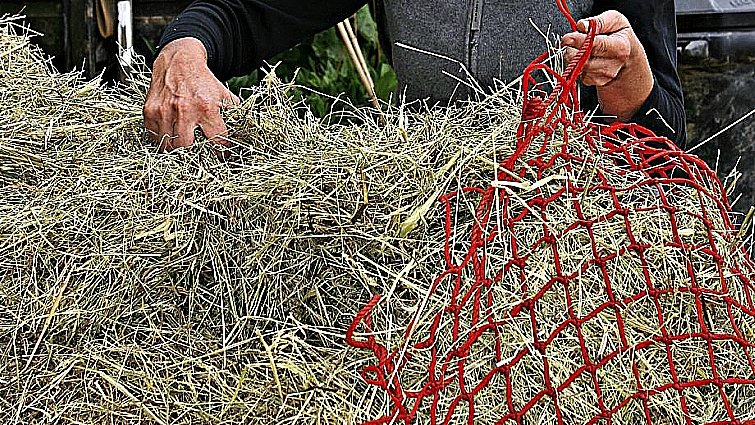
One Mask Tells the Whole Story
Emily Boyce, a 20-year-old equine studies student, made a discovery that’s resonating with horse owners everywhere. While filling haynets for her university research project, she wore a standard face mask—something she wouldn’t normally do. After completing just 20 haynets out of 45, she was shocked to see how filthy the mask had become.
“I wouldn’t usually wear a mask but health and safety at university requires it,” Emily explains. “The mask was so dirty after 20 nets that I really stopped to think about what I was actually breathing in.”
Emily works on a hunting yard every Sunday and owns a New Forest pony named Rufus. Her personal connection to this topic runs deep—Rufus suffers from severe equine asthma, a condition that’s become increasingly common in horses.
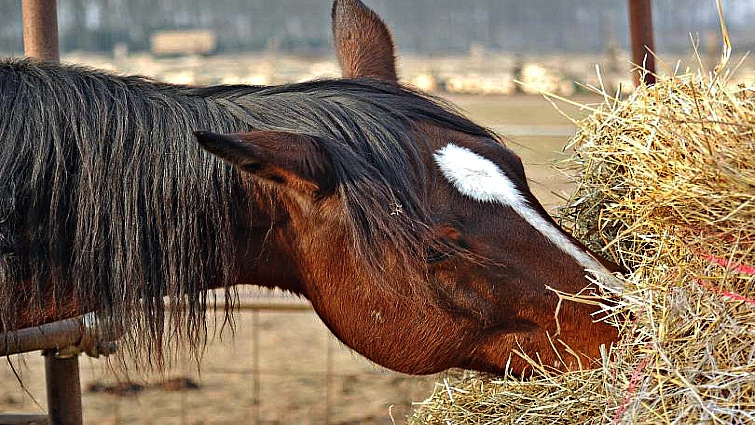
Why Hay Dust Matters for Your Horse
“Rufus has really fueled my passion for researching hay quality and finding ways to reduce respiratory symptoms in affected horses,” Emily says. The bale she was using seemed normal at first glance—it didn’t appear particularly dusty, and she was working in a large, well-ventilated space with open doors.
Yet the evidence was undeniable: that mask didn’t lie.
When Emily posted a photo of her grimy mask on Facebook, the response was overwhelming. Hundreds of horse owners commented, sharing their own concerns about dust and hay quality. Many said they’d never realized the extent of the problem and were planning to invest in protective masks.
The Human Health Factor: Farmer’s Lung
But this issue isn’t just about our horses—it’s about us too. The comments opened Emily’s eyes to a condition she’d heard of but never fully understood: farmer’s lung. Several people mentioned knowing others who’d developed this serious respiratory condition.
According to the Health and Safety Executive (HSE), farmer’s lung is the most common occupational form of extrinsic allergic alveolitis—a group of lung diseases triggered by exposure to certain substances. The condition develops from an allergic response to microbes that form mold on vegetable matter during storage.
When you handle moldy straw, hay, or grain—especially in poorly ventilated spaces—you’re inhaling spores and other harmful antigenic materials. The HSE strongly advises that respiratory protection should be worn whenever handling stored crops.
Practical Steps to Reduce Dust Exposure
The good news? There are simple ways to protect both yourself and your horse from hay dust:
- Wear a face mask when filling haynets, especially during peak hay handling times
- Ensure good ventilation in your barn or hay storage area
- Consider soaking hay before feeding to reduce dust particles
- Invest in quality hay that’s been properly stored to minimize mold growth
- Inspect bales carefully for signs of mold or excessive dust before use
A Wake-Up Call for the Equestrian Community
Emily’s research has become a powerful reminder that the everyday tasks we take for granted at the yard can have serious health implications. Think about it: yard workers who fill 40+ haynets daily are exposed to this dust constantly. The cumulative effect could be significant.
“When I realized how much dust came from just 20 nets, I thought about all those people who do this work every single day,” Emily reflects. “I’m definitely going to wear a mask going forward. This experience has changed how I think about hay handling.”
Whether you’re a professional yard worker, a dedicated home horse owner, or somewhere in between, this is a conversation worth having. Your respiratory health—and your horse’s—deserves the same care and attention you give to their nutrition and training.
Take Emily’s discovery to heart: that visible dust on a mask represents what’s invisible in the air around you. Protecting yourself while caring for your horses isn’t just good practice—it’s essential.