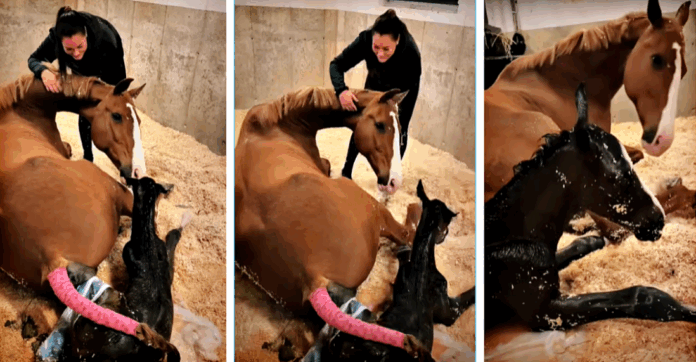

There’s something truly magical about witnessing a horse give birth. If you’re a horse owner or breeder, you know the incredible emotional rush that comes with welcoming a new foal into the world. This heartwarming story captures that beautiful moment when a mare meets her baby for the very first time—and trust us, it’s absolutely precious.
Understanding the Three Stages of Equine Labor
Before we dive into our touching video, let’s explore how horse labor works. Understanding the birthing process helps us appreciate what our mares go through and recognize when something might need veterinary attention.
Stage One: Preparation (1-2 Hours)
The first stage begins when contractions start. During this time, your mare may repeatedly roll, shift positions, sit, and lie down as she naturally prepares the foal for delivery. These contractions gently move the foal through the cervix and into the birth canal. You might notice the fetal membranes (the allantois) becoming visible at the mare’s vulva. Stage one concludes when the protective sac ruptures, releasing a surge of fluid. (Quick tip: don’t confuse this with urination—they’re quite different!)
Stage Two: The Birth (Normally 20-30 Minutes)
This is when the magic happens! Stage two moves relatively quickly, and here’s what you should watch for. A normal foal presentation resembles a diving position: front hooves appearing first (one slightly ahead of the other), followed by the nose, head, neck, shoulders, and hindquarters. If you see the soles of the foal’s feet facing upward or notice any deviation from this typical position, contact your veterinarian immediately.
Important: If delivery takes longer than 30 minutes or there’s no visible progress after 10-15 minutes, call your equine vet right away. One particularly serious emergency is a “Red Bag Delivery,” where the chorioallantois ruptures prematurely. If you spot crimson or maroon membranes covering the foal, quickly tear open the placenta—every second counts.
Stage Three: Placental Delivery (1-3 Hours)
After the foal arrives safely, your mare enters the third stage of labor. This is when the placenta is expelled from the body. Most mares naturally pass the placenta within one to three hours of birth. If the placenta hasn’t been delivered within three hours, contact your veterinarian. A retained placenta can lead to serious complications like laminitis and systemic infection.
The Moment That Melted Our Hearts
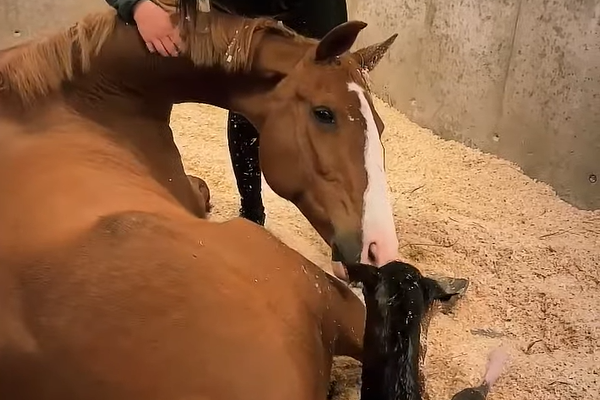
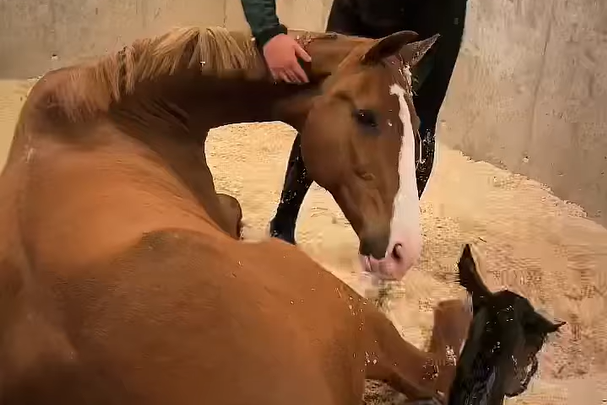
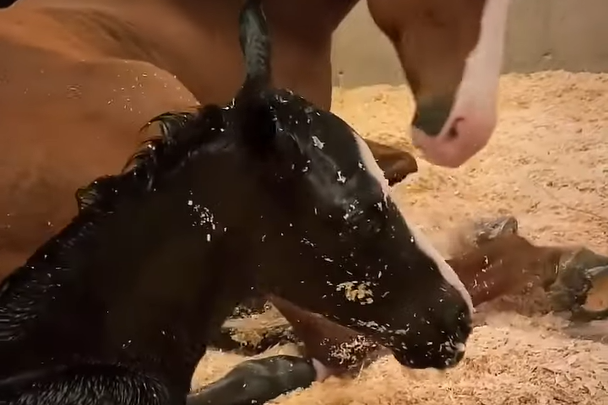
Now, feast your eyes on this absolutely touching scene of a new mama mare catching her first glimpse of her precious newborn. This video perfectly captures the wonder and tenderness of that first meeting—it’s the kind of moment that reminds us why we love horses so much.
Welcome to the World, Little One!
From the very first moment, you can see the protective instinct kick in as the mare sniffs and nuzzles her newborn baby. There’s an instant bond, a recognition between mother and foal that never gets old, no matter how many times you witness it. This beautiful scene is exactly what being part of the horse community is all about.
We’d love to hear from you! Did this video touch your heart? Share your thoughts in the comments below, and don’t forget to spread this heartwarming moment with your fellow horse lovers on social media. There’s nothing quite like celebrating new life and the incredible bond between a mare and her foal. Here’s to new beginnings! 🐴❤️