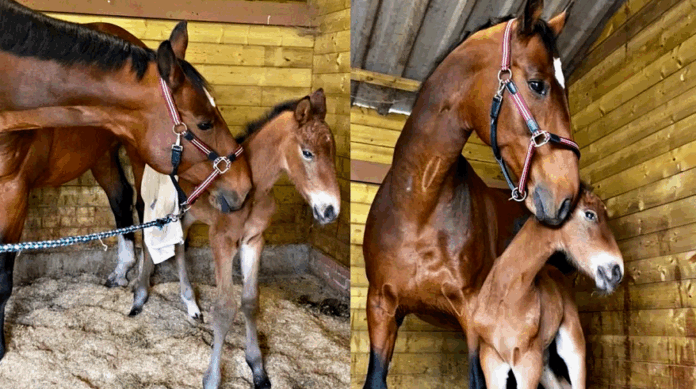

Nature can be unpredictable, and sadly, some foals lose their mothers before reaching the typical weaning age of six months. When this happens, these young horses become orphans who desperately need proper nutrition and maternal care to survive. But there’s hope—and sometimes, that hope comes in the form of another caring mare willing to become a foster mother.
In the heartwarming video below, you’ll witness exactly that: a gentle mother horse stepping up to nurture and care for an orphaned foal that isn’t her own. It’s a beautiful reminder of the compassion animals can show toward one another.
How Foster Mares Help Orphaned Foals
Using another mare as a foster mother is one of the most successful methods for raising orphaned foals. However, it requires the foster mare to not only accept the foal but also provide her milk. This doesn’t always happen naturally!
To help mares accept foals as their own, experienced horse breeders use several proven techniques:
- Scent masking: Rubbing the foal with the foster mare’s feces, milk, or sweat helps the mare recognize the foal as her own
- Ointment application: A strong-smelling steam ointment can be applied to both the mare’s nose and the foal to interfere with natural scent detection and “fool” the mare into acceptance
Critical Care for Orphaned Foals
Whether you’re using a foster mare or bottle-feeding, orphaned foals require specialized care during their first weeks of life. Here are the essential steps:
Nutrition and Feeding Schedule
Newborn foals should receive colostrum (the first milk) as soon as possible—it’s packed with antibodies essential for survival. If the mare died during birth, colostrum from another mare is critical.
For orphan foals on a suckling mare or artificial milk substitutes, follow this feeding schedule:
- Week 1: Feed every 1-2 hours
- Week 2 and beyond: Feed every 4-6 hours
Medical Protocols
Before introducing an orphaned foal to a foster mare, ensure the foal receives:
- Adequate colostrum from a reliable source
- Tetanus antitoxin
- Antibiotic coverage
- IgG (immunoglobulin) level testing with plasma infusion if levels are low
Creating the Perfect Environment
Raising an orphan foal is labor-intensive but rewarding. Set up your foal care station with these essentials:
- A safe, quiet, clean environment
- At least two trained helpers on rotation
- Proper feeding equipment and milk replacer (if needed)
- Regular monitoring of growth rate and health
With the right care, medical attention, and compassion—whether from a foster mare or dedicated human handlers—orphaned foals can thrive and grow into healthy, strong horses.
Have you experienced fostering a foal? We’d love to hear your story in the comments below! And please share this touching video with your equestrian friends and family—it’s sure to brighten their day. 🐴