
Every equestrian has been there—thrown off a horse, dusted yourself off, and climbed right back on. It’s what we do because we love horses and the sport. We keep trying, keep learning, and keep pushing forward, even after those challenging moments that test our patience and courage.
The Three Golden Rules of Riding
Before we dive into this hilarious parade incident, let’s remember this important riding wisdom: Never blame your horse. Why? Because there are three reasons the fault lies with the rider:
- You should have ridden him better
- You should have trained him better
- You should have left him at home
These three points perfectly illustrate what happened in this viral parade video—a masterclass in how conflicting rider cues can send even a well-intentioned horse into complete confusion and panic.
What Happened at the Parade?
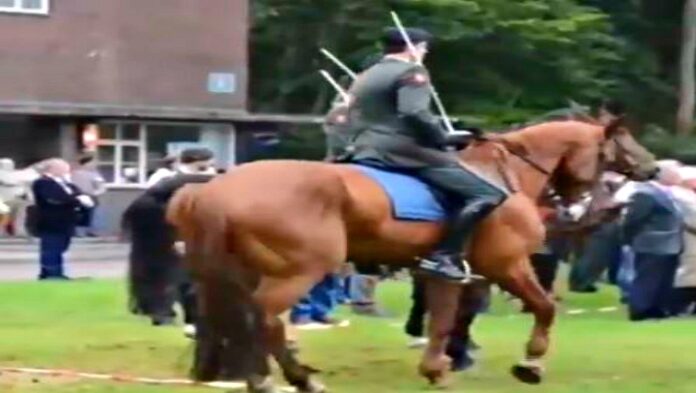
The parade was in full swing when suddenly, things took an unexpected turn. The horse started acting nervously, and the rider—despite holding a sword and trying to maintain his composure—couldn’t prevent what was about to happen. The mounted equestrian made valiant efforts to control the situation, but the horse had other ideas. Within moments, the horse bolted, and the rider ended up colliding with a tree branch.
Thankfully, no one was seriously injured during this chaotic moment. However, watching the video reveals valuable lessons about rider experience and communication.
The Root Cause: Conflicting Rider Aids
This incident is a textbook example of why horse training and horsemanship matter so much. Here’s what actually happened from the horse’s perspective:
As soon as the horse showed signs of nervousness, the rider became nervous too. This anxiety transferred directly to the horse through the rider’s body language and position. When nervous riders panic, they typically do two conflicting things at once:
- Clamping the legs – In equestrian language, this is a signal meaning “go forward” or “accelerate”
- Pulling on the reins – This clearly means “stop” or “slow down”
When a horse receives these contradictory signals simultaneously, it creates confusion and anxiety. The horse literally has nowhere to go but up—resulting in rearing and bolting behavior.
How the Situation Escalated
As the horse began to react, the rider became even more frightened and clamped down even harder with his legs. The horse, responding to what it interpreted as an urgent request for “more go,” took off at full speed. You can clearly see the rider’s spurs digging in unintentionally, which only reinforced the “forward” command.
This is a perfect storm of miscommunication between horse and rider—a reminder that equestrian sports require not just courage, but proper training, calm demeanor, and understanding of equine psychology.
The Takeaway for All Riders
This parade incident serves as both entertainment and education. It shows us why:
- Rider training is just as important as horse training
- Staying calm under pressure is essential to horse safety
- Understanding how horses interpret our aids prevents dangerous situations
- Experience matters—especially in unpredictable environments like parades
Watch the video below and see for yourself how quickly a situation can escalate when rider cues become confused. Have you experienced similar moments with your horse? Share your thoughts and stories in the comments—we’d love to hear from fellow equestrians!
What do you think about this parade mishap? Tell us your opinions in the comments below!