
If you’re a horse owner—whether you’re just starting out or have years of experience—you’ve probably asked yourself: How often does my horse need trimming and re-shoeing? It’s one of the most common questions in the equestrian world, and the answer might surprise you with its consistency.
The Standard Shoeing Schedule
Most horses need trimming and re-shoeing every 6 weeks. This timeframe keeps your horse’s hooves balanced, healthy, and properly supported. However, this isn’t a one-size-fits-all rule. Some horses require more frequent visits, especially when farriers are working with corrective shoeing techniques.
Corrective Shoeing: Getting Back to Basics
Sometimes, farriers use corrective shoeing over an extended period to accomplish what we call “getting the foot back to where it is supposed to be”—essentially returning the hoof to its natural, healthy state as the horse was born with it.
Adult horses often develop hoof problems that weren’t present at birth, including:
- Low or unbalanced heels
- Misaligned hoof angles
- Uneven angles between front and back feet
- Crumbly, dry hooves
- Cracks, splits, and missing chunks of hoof wall
Corrective shoeing addresses these issues strategically, often requiring more frequent farrier visits than routine maintenance.
The Farrier’s Perspective: A Behind-the-Scenes Look
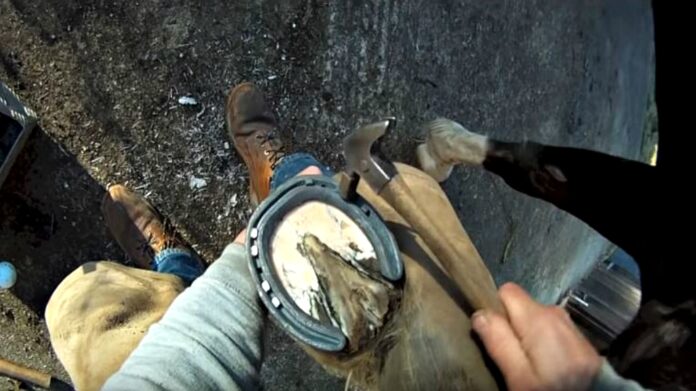
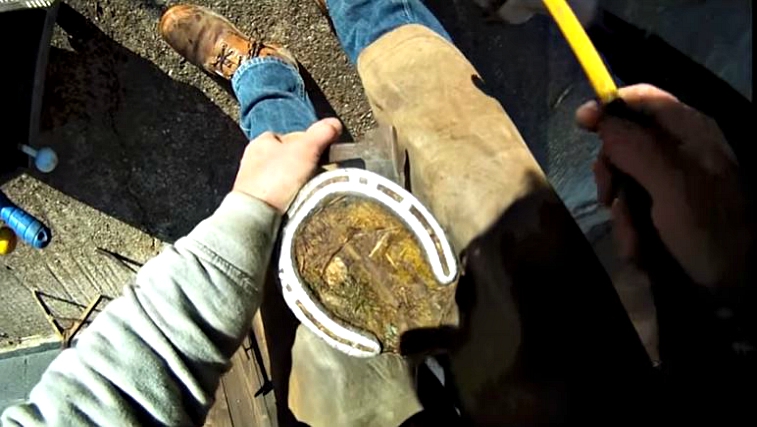
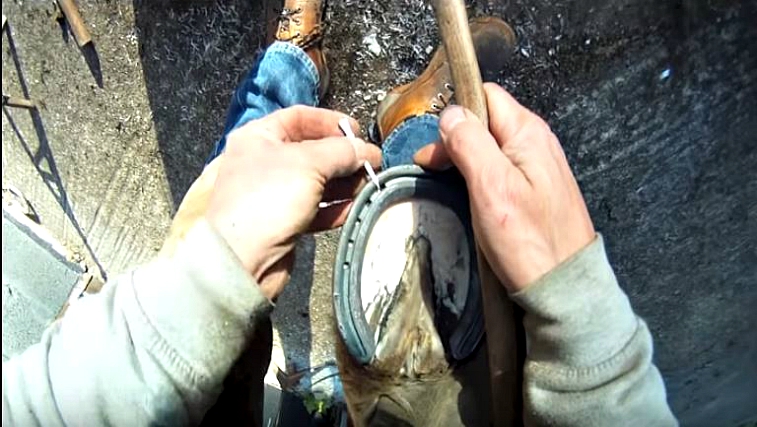
Ever wondered what the shoeing process really looks like from the professional’s viewpoint? One innovative farrier mounted a head camera to show us exactly what goes into this intricate craft. The video reveals the precision, skill, and dedication required to keep horses properly shod.
Why We Should Appreciate Our Farriers
Watching this video from a farrier’s perspective gives us profound respect for these skilled professionals. They:
- Work in physically demanding positions for hours
- Develop expert knowledge of equine anatomy and biomechanics
- Make precise adjustments that affect your horse’s comfort and performance
- Problem-solve complex hoof issues with creativity and experience
We should all take a moment to thank our farriers for the amazing work they do! Their expertise directly impacts your horse’s soundness, longevity, and quality of life.
Key Takeaways
Remember these essential points about horse shoeing:
- Schedule routine trims and re-shoeing every 6 weeks
- Listen to your farrier about corrective shoeing needs
- Maintain open communication about your horse’s hoof health
- Recognize that proper farrier care is an investment in your horse’s wellbeing
Your farrier isn’t just putting shoes on your horse—they’re maintaining the foundation of your equine partner’s health and performance. That’s work worth appreciating!