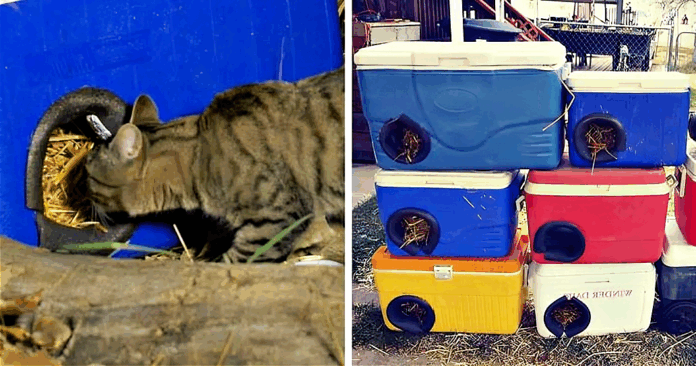

Winter poses a serious challenge for stray and feral cats across the country. While we settle into our warm homes, countless homeless felines battle freezing temperatures with no shelter to protect them. It’s a harsh reality that most of us don’t think about—until one compassionate person decides to do something about it.
Meet Philip Rogich from Ogden, Utah, a man who saw an opportunity to transform discarded items into life-saving refuges. After spotting a Facebook post about converting old coolers into cat shelters, Philip knew he had found his calling. “I saw a Facebook post about a man making them and thought I would give it a try,” he shared with Bored Panda. “I do a lot of charity work, mostly with children. My wife and I are also animal lovers, and I wanted to do something for them.”
How the Cooler Shelter Works
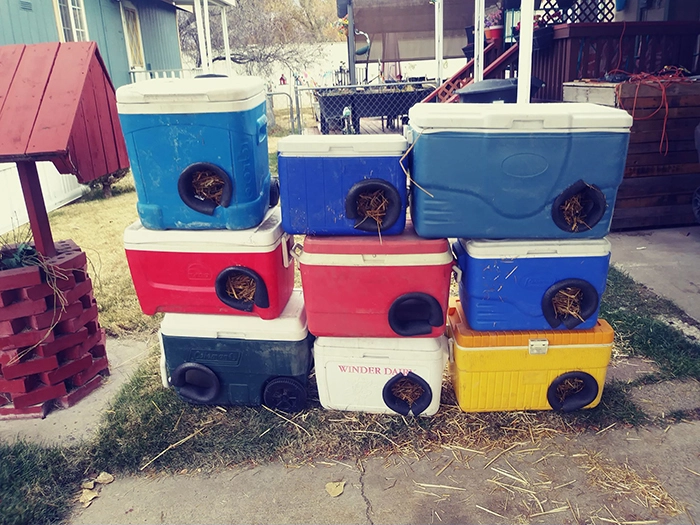
The genius behind Philip’s project lies in its elegant simplicity. Coolers are engineered to maintain temperature—typically keeping contents cold. Philip flips this concept on its head, using the same insulation properties to keep cats warm. The process is straightforward but incredibly effective:
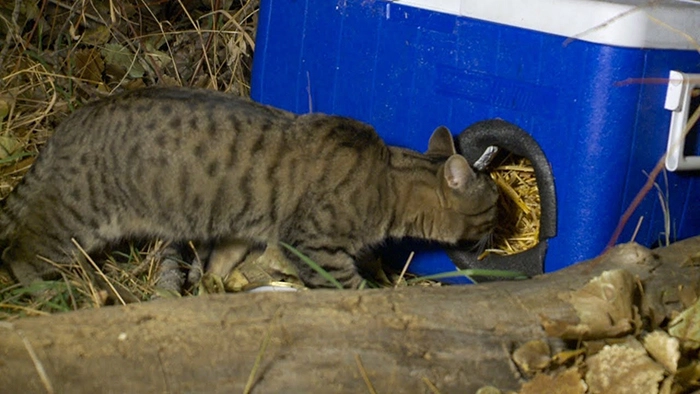
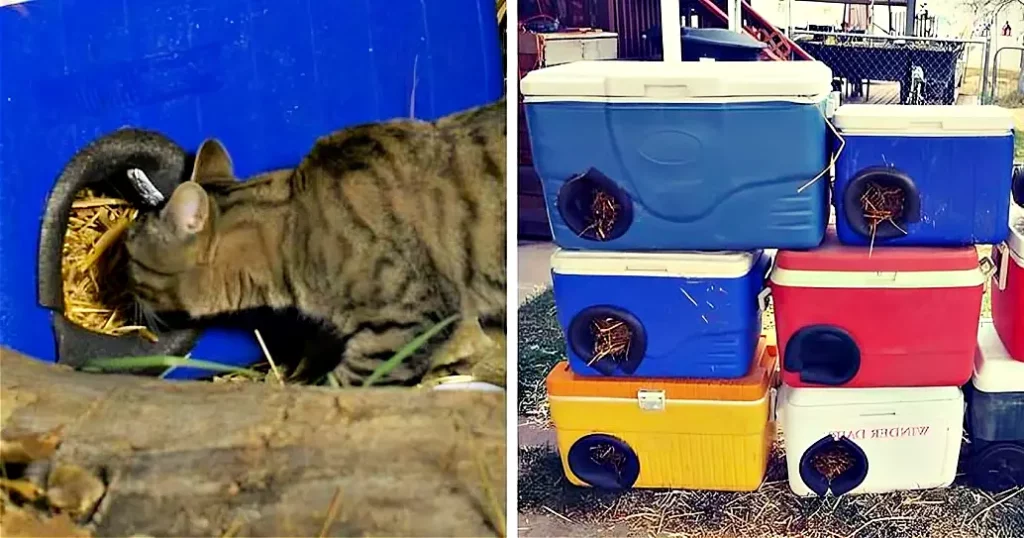
First, he uses a six-inch drill bit to create an entrance hole. To prevent wind from rushing in, he lines the opening with pipe insulation. Inside, he fills the cooler with straw—a natural insulator that keeps the interior dry and toasty. The result? A weatherproof shelter spacious enough to accommodate two or three cats comfortably.
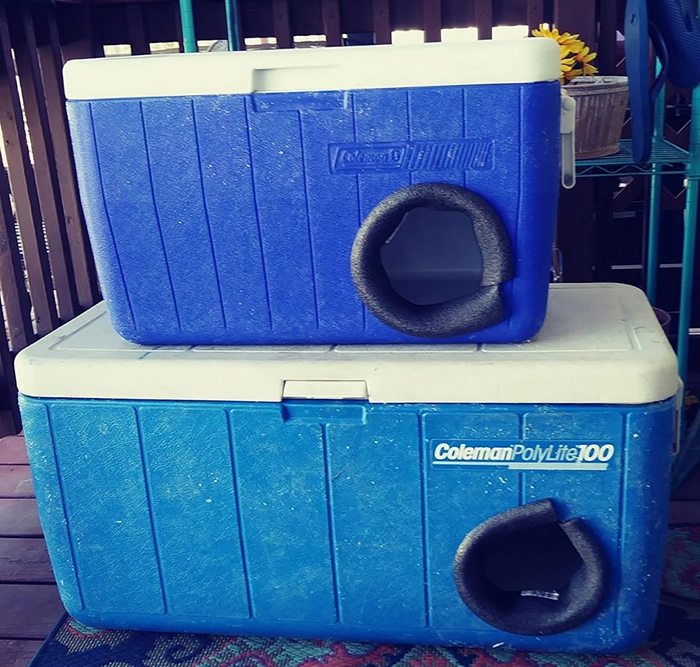
“Normally, the cooler keeps things cold. We’re going to use it to keep animals warm,” Philip explained to Fox13. It’s a brilliant example of resourceful problem-solving that costs very little yet saves lives.
From Local Project to National Movement
What started as one man’s mission has snowballed into a community-wide effort. Philip has constructed 77 shelters so far, with materials on hand to create many more. But here’s the remarkable part—the community has embraced the project wholeheartedly.
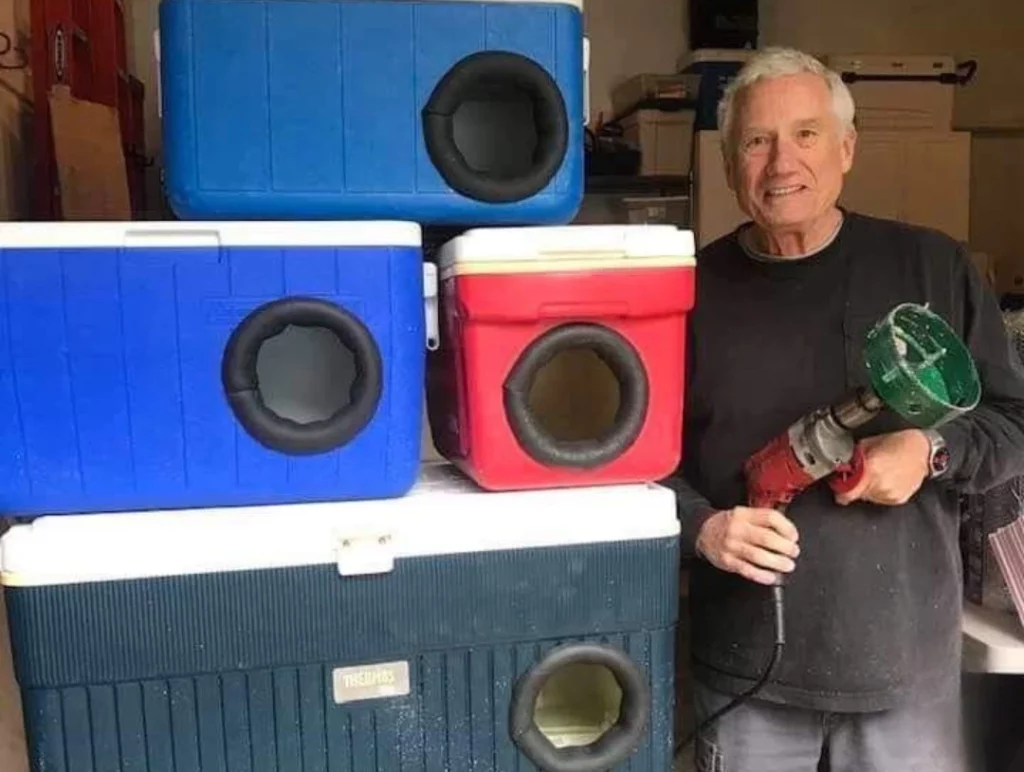
“People donate old coolers, straw, and money,” Philip said, still amazed by the response. “I had no idea this was going to get so big. It started with a Facebook post asking for old coolers. Then the local Fox station did a story on me. The story went national. I’ve been hearing from people from all over the world.”
Local donations have been crucial to the project’s growth. Community members continuously provide old coolers and straw, transforming what would have been landfill waste into shelter for vulnerable animals. This collaborative approach demonstrates how collective compassion can amplify individual efforts.
Spreading the Message Globally
Recognizing the potential for widespread impact, Philip created a how-to video, enabling animal lovers everywhere to build their own cooler shelters. This democratization of the project means stray cats in cold climates across the globe now have access to life-saving protection.
“I’m glad to be a catalyst for bringing a little good to our four-legged friends,” Philip reflected on his expanding reach.
Why This Matters: Honoring the Forgotten
Beyond the logistics, Philip’s project addresses something deeper—the visibility and dignity of stray animals. Feral cats are often overlooked, dismissed as nuisances rather than living creatures deserving of compassion.
“[Feral cats] just disappear, get overlooked. They get cold in the wintertime, too. They’re living creatures,” Philip explained. With every shelter he builds, he sends a powerful message: these animals matter, and their survival deserves our attention and effort.
The Power of Small Actions
Philip Rogich’s cooler shelter project proves that meaningful change doesn’t require grand gestures or massive budgets. Armed with discarded materials, a drill, some insulation, and genuine compassion, one person has improved the lives of dozens of stray cats—and inspired countless others to do the same.
As winter approaches, consider how you might support similar efforts in your community. Whether it’s donating materials, spreading awareness, or building your own shelter, every act of kindness makes a tangible difference for animals struggling to survive the cold.
That’s the heart of Philip’s mission: proving that small acts of compassion, multiplied across a community, can transform survival into hope for our most vulnerable four-legged friends.