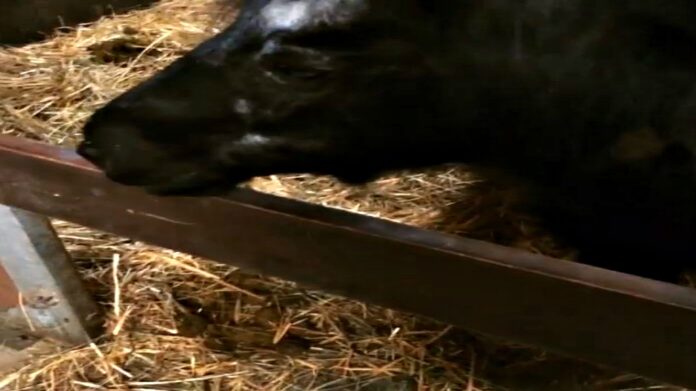

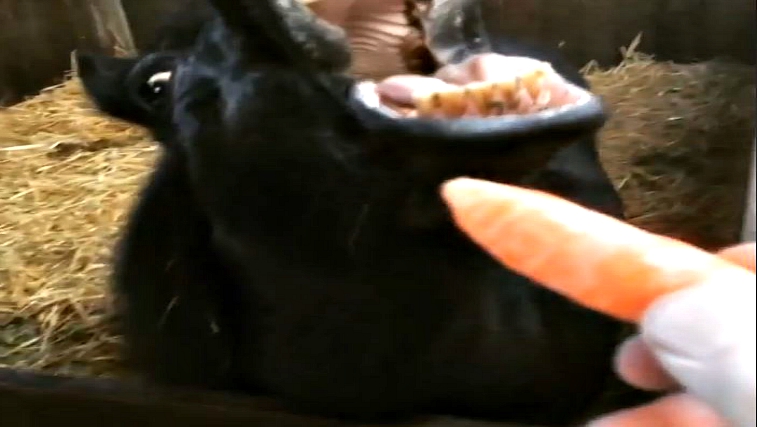
Carrots are a beloved treat for horses everywhere, but one adorable mini horse named Murmel has sparked an important conversation about proper feeding techniques. This charming equine has developed a habit of taking carrots directly from his owner’s hand—mouth wide open and ready to chomp! While the video is undeniably cute, it’s raised some thoughtful questions within the horse community about the safest ways to feed our four-legged friends.
Murmel’s Carrot Habit Goes Viral
When Murmel’s owner shared the video on Facebook, viewers were enchanted by the mini horse’s eagerness and trust. Each time his owner holds up a carrot, Murmel automatically opens his mouth, clearly anticipating his favorite snack. It’s a sweet moment that showcases the bond between horse and handler—but it also triggered an important safety discussion among experienced equestrians.
The Choking Concern: What Horse Lovers Are Saying
One Facebook commenter raised a valid safety concern: “It concerns me when people feed carrots like this because being solid they have choked horses as they are just the right size to block their airway. Carrots should either be fed on the ground so the horse chews and breaks them or given to horses after they have been cut lengthways.”
This comment sparked a lively debate, with another experienced horse owner responding with their own insights about equine choking and emergency response. They emphasized that while choking is serious, immediate veterinary care and proper handling techniques can be lifesaving.

Understanding Safe Carrot Feeding Practices
So what’s the best way to feed carrots to your horse? Here are some expert-recommended methods:
- Cut Lengthways: Slicing carrots lengthwise reduces choking risk by creating long, thin pieces that are easier to chew
- Ground Feeding: Placing carrots on the ground encourages natural chewing behavior and allows your horse to process the treat properly
- Hand Feeding Safety: If you hand-feed, keep your palm flat and fingers together to prevent accidental nipping
- Supervision: Always monitor your horse while eating treats, and watch for signs of difficulty
The Bottom Line on Horse Treats
While Murmel’s direct-mouth carrot method is undeniably charming and shows the trust between horse and owner, many equestrian experts recommend safer alternatives. Even if your horse has successfully eaten carrots this way before, it’s worth considering the potential risks—especially for younger horses or those less experienced with treats.
The good news? You don’t have to give up your horse’s favorite snack! Simply adjusting how you serve carrots—whether by cutting them lengthwise or offering them on the ground—can help keep your equine companion safe while still providing that delicious treat they love.
Share Your Experience
Have you had experience with horse choking or carrot feeding methods? What’s your preferred way to treat your horse? Watch Murmel’s adorable video below and join the conversation in the comments. We’d love to hear your thoughts on the safest ways to spoil our equine friends!