
It’s one of the hardest decisions any horse owner faces: when a beloved equine partner shows aggressive behavior that seems uncontrollable and dangerous. While veterinary medicine has come incredibly far, there are still conditions—both rare and common—that can cause profound suffering in our horses. Sometimes the true cause of behavioral problems isn’t discovered until it’s too late.
This heartbreaking case serves as a powerful reminder for all horse lovers: aggressive behavior in horses is often a cry for help, not a character flaw.
A Hidden Source of Pain Revealed
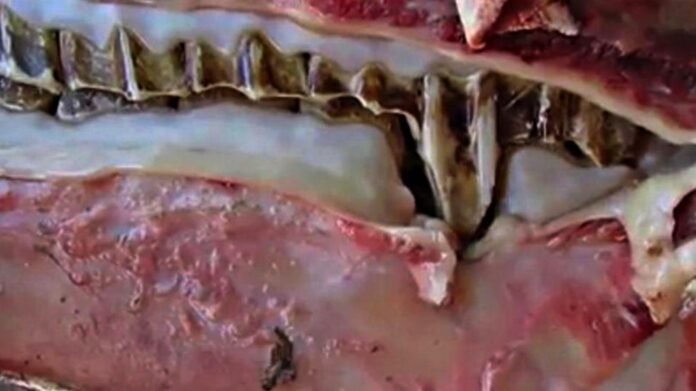
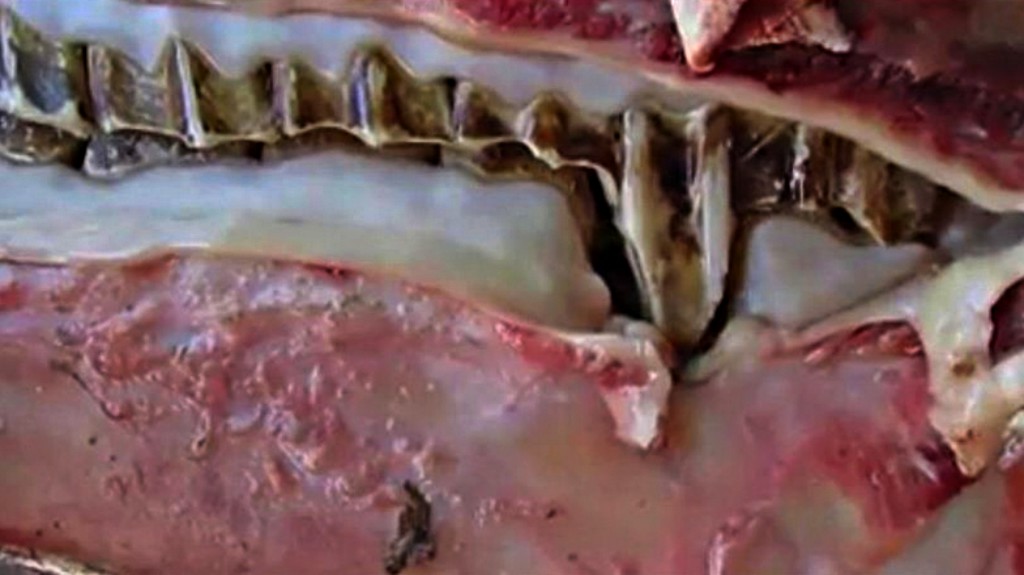
The horse in this story was euthanized due to increasingly aggressive behavior that posed a safety risk to handlers and other animals. However, a post-mortem necropsy revealed something tragic: the horse was suffering from an extremely painful mouth condition that likely made every interaction excruciating.
As Whole Horse Equitation wisely shared: “This photo, taken during necropsy, shows the mouth of a horse who was euthanized for aggressive behavior. Next time your horse says ‘NO’, remember that he might be trying to tell you he is in pain.”
Why This Matters: Listen to Your Horse
When a horse resists riding, refuses to cooperate, or shows sudden aggression, we often assume it’s a behavioral or training issue. But horses can’t tell us when something hurts—they can only show us through their reactions. What we interpret as stubbornness or aggression might actually be a desperate plea for relief.
This case highlights why it’s crucial to investigate the root cause of behavioral changes before making irreversible decisions. A thorough veterinary examination, including dental checks, can reveal hidden sources of pain that completely change the situation.
A Preventable Tragedy
While the decision to euthanize is never taken lightly, this particular case may have been preventable. The owner made the decision without waiting for necropsy results—results that could have shown a treatable condition. Severe dental disease in horses is manageable with proper veterinary care and treatment.
Before pursuing euthanasia for behavioral problems, always:
- Schedule a comprehensive veterinary exam
- Have your equine dentist evaluate for dental disease or sharp points
- Check for back pain, lameness, or musculoskeletal issues
- Consider medical causes before assuming behavioral ones
- Wait for diagnostic results before making final decisions
The Takeaway for Horse Lovers
Every aggressive, resistant, or unusual behavior in a horse deserves investigation. Your horse doesn’t wake up wanting to hurt people or refuse cooperation—something is usually wrong. By taking the time to understand what our horses are trying to communicate through their behavior, we can provide the care and relief they desperately need.
The next time your horse says “no” to something, pause and ask yourself: “Is my horse in pain?” It might just save their life.