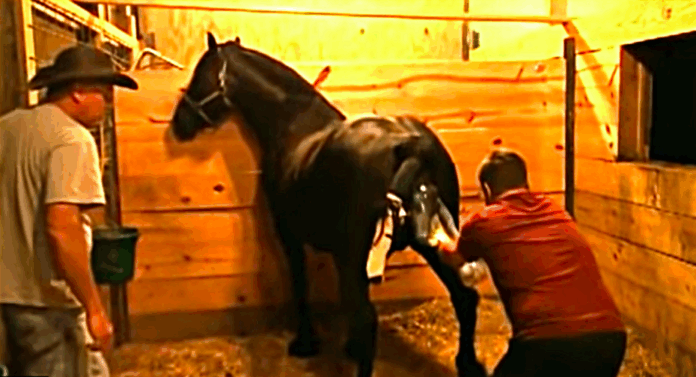

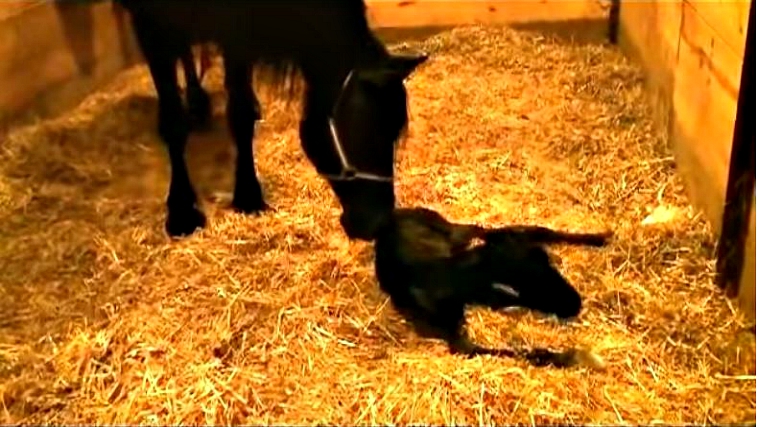
There’s something truly magical about witnessing new life enter the world, especially when it happens in such an extraordinary way. Eliza, an elegant 11-year-old purebred Friesian mare, recently gave birth to her first foal in one of the most remarkable ways possible—while standing on her feet.
The stunning filly is sired by Raven of Horsemeister, a magnificent purebred Friesian stallion. This birth represents a rare moment in equine reproduction, showcasing the incredible instincts and strength of these majestic horses.
The Beauty of Natural Birth
While Eliza’s standing delivery is visually striking, it also highlights an important conversation in the equestrian community: when should humans intervene during foaling, and when should we let nature take its course?
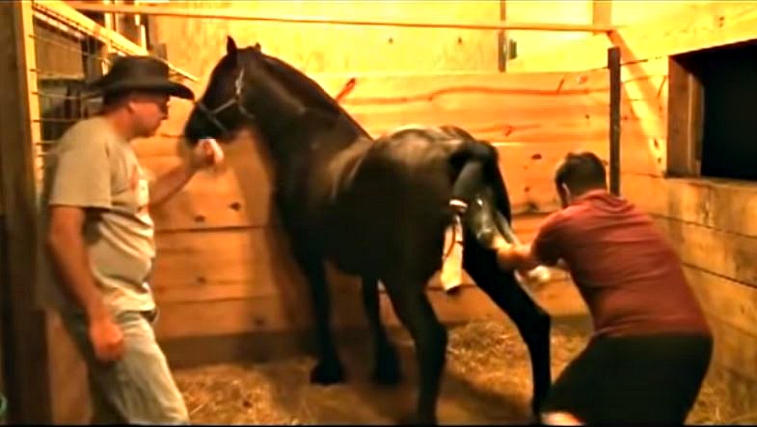
In this video, you’ll see both the raw beauty of a mare’s natural instincts and a human attendant gently assisting as the foal emerges. The handler pulls gently during the mare’s contractions—a technique used when foals may be positioned awkwardly or labor has stalled. Since Eliza allowed this assistance, it’s likely she recognized the help she needed.
When Should Humans Help During Foaling?
This raises an important question for horse owners and breeders: what’s the right level of intervention during foaling?
- Let Nature Lead: Mares are designed to give birth. In most cases, minimal human interference is best for both mare and foal.
- Intervene When Necessary: If the mare’s life is in danger, or if the foal is truly stuck despite the mare’s efforts, gentle assistance during contractions may be necessary.
- Read the Mare: A mare’s behavior often signals whether she welcomes help. If she resists or seems distressed by human presence, step back.
The key principle is this: human intervention should only occur when the health and safety of the mare or foal is genuinely at risk. Otherwise, nature—and the mare’s incredible maternal instincts—should guide the process.
Watch This Rare Moment
See Eliza’s remarkable standing delivery for yourself in this video. It’s a stunning reminder of the strength and resilience of Friesian mares and the delicate balance between respecting natural processes and providing care when truly needed.
What Do You Think?
The equestrian community has diverse perspectives on foaling assistance. What are your thoughts? Should handlers have intervened, or was Eliza managing beautifully on her own? Share your insights in the comments below—we’d love to hear from experienced breeders and horse lovers alike!