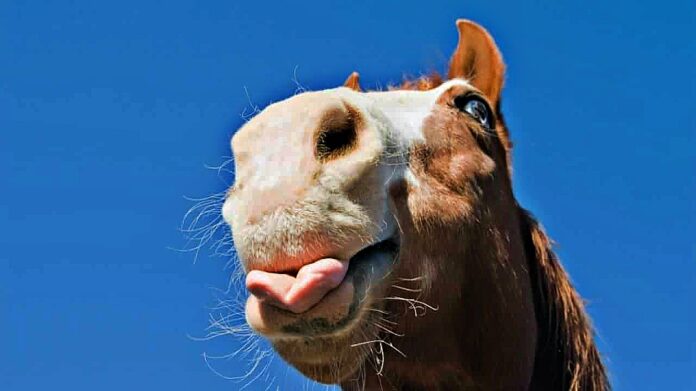

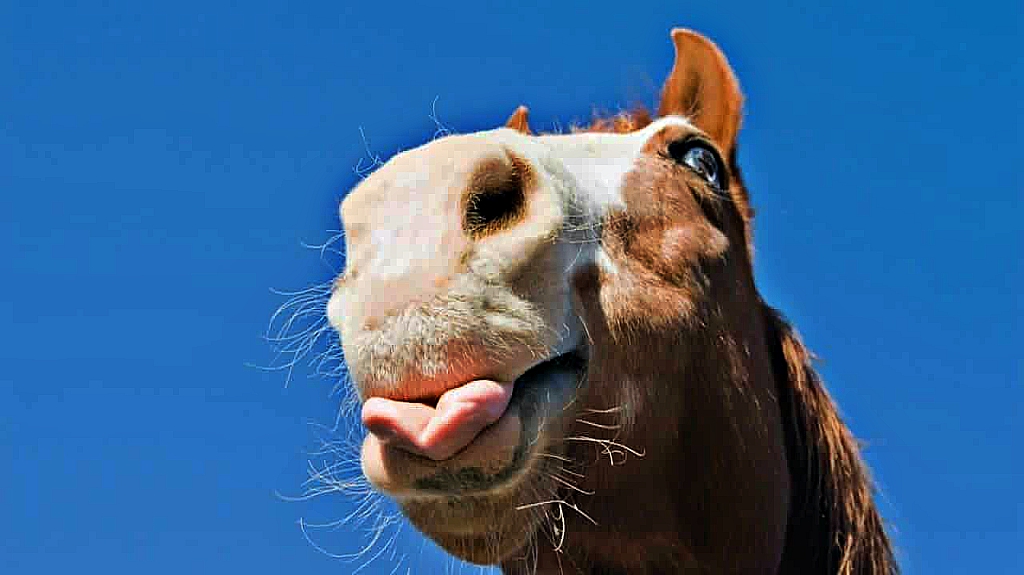
Ever noticed your horse making hilariously dramatic expressions when tasting something they like—or absolutely detest? Well, you’re not imagining things! Canadian researchers have finally proven what horse lovers have suspected all along: our equine friends definitely have opinions about what goes in their mouths, and they’re not shy about showing it.
A groundbreaking study from the University of Lethbridge’s Canadian Centre for Behavioural Neuroscience has identified clear, measurable reactions that horses display in response to sweet and bitter flavors. And the researchers have given these adorable responses some pretty fitting names: the “sucrose bob” and the “quinine gape.”
The Science Behind the Smiles
Professor Ian Q. Whishaw, MSc, Ph.D., along with Ph.D. candidate Emilyne S. Jankunis, conducted a fascinating behavioral study that involved 44 stabled riding horses. The researchers administered oral infusions of either sucrose (sugar water) or quinine (a bitter compound) to the horses, carefully video-recording their reactions frame-by-frame for detailed analysis. A control group received plain water to establish baseline responses.
What they discovered is nothing short of delightful!
The “Sucrose Bob” – A Horse’s Way of Saying “Yes, Please!”
When horses received the sweet infusion, they consistently displayed the same adorable behavior: head-bobbing. And we mean every single one of them! This reaction has never been scientifically documented before, making it a truly novel discovery in equine behavioral science.
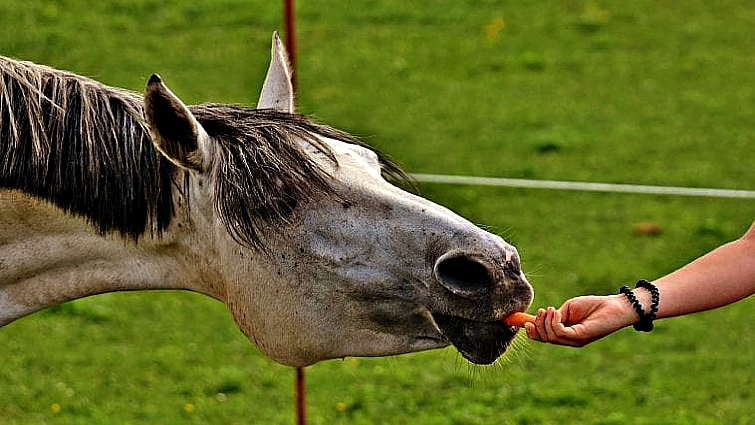
Along with the distinctive bobbing motion, the horses showed several telltale signs of pleasure:
- Forward, relaxed ears
- Lip-licking with tongue slightly extended
- Overall body language suggesting contentment and approval
“All the horses consuming the sweet infusion consistently bobbed their heads—as if they were very pleased—when they got the sugar treat,” Whishaw explained. It’s practically their way of saying, “That’s amazing! More please!”
The Bitter End – Understanding the “Quinine Gape”
In stark contrast, when horses tasted the bitter quinine solution, they displayed completely different facial expressions and body language—the “quinine gape.” This response clearly indicated their distaste for the unpleasant flavor, giving us unmistakable insight into their preferences.
What This Means for Equine Neuroscience
From a neuroscience perspective, these distinct reactions suggest a clear connection between taste perception and the pleasure/distaste centers in a horse’s brain. This research also settles an ongoing debate in the equestrian world: some experts had argued that horses have lost their ability to detect sweet tastes over domestication. This study definitively proves that theory wrong.
“Some people had proposed that horses have lost sweet sensitivity, but our work shows that is not so,” Whishaw said, backing up the research with solid evidence.
Practical Applications for Horse Owners
Beyond just satisfying our curiosity about our horses’ personalities, this research has real, practical applications for horse care. One of the biggest challenges many horse owners face is administering unpleasant-tasting medications, particularly dewormers.
Thanks to this research, Whishaw and his team have developed a simple but effective solution. Jankunis worked with a horse that stubbornly refused to accept oral dewormer medication. By introducing the horse to sugar water first—and using positive reinforcement with the sweetness—the horse gradually became more accepting of having liquid introduced into its mouth. After just a few trials, the previously resistant horse happily accepted its dewormer without fuss.
“It did not take many trials before it became very accepting of having things squirted into its mouth, and then it readily accepted the dewormer,” Whishaw shared.
The Bottom Line
This charming research confirms what we’ve always known in our hearts: horses are sophisticated creatures with distinct taste preferences, clear emotional responses, and the ability to express their feelings through unmistakable facial expressions. Whether it’s the joyful sucrose bob or the dramatic quinine gape, our equine companions are absolutely using their faces to communicate with us—we just needed the science to back it up!
Next time you catch your horse making a funny face at mealtime, you’ll know exactly what they’re thinking—and you might just be able to use that knowledge to make their lives (and yours) a little bit easier.