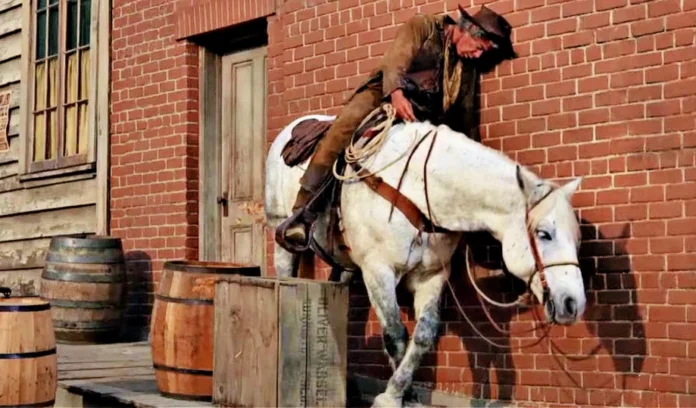

Few moments in Western film history rival the pure comedic genius of Cat Ballou (1965). While Lee Marvin’s Oscar-winning performance as the hapless gunfighter Kid Shelleen remains iconic, there’s another star who stole hearts and laughs: his brilliantly trained equine co-star. The unforgettable scene of man and horse leaning drunkenly against a brick wall has captivated audiences for nearly 60 years—and for good reason.
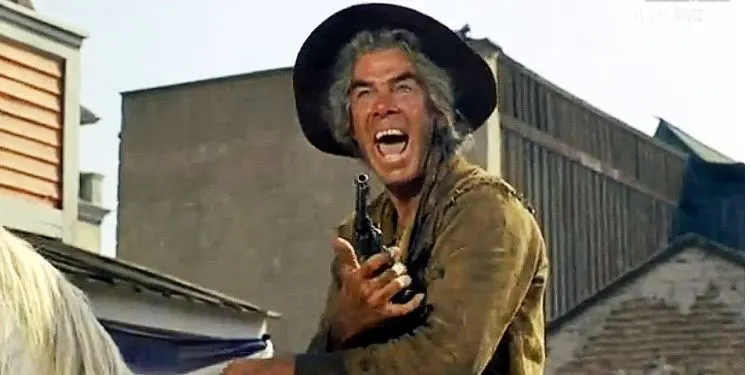
The Legendary Drunken Horse Scene
Picture this: Kid Shelleen, barely able to stand, slumps against a weathered brick wall. But he’s not alone. His horse mirrors his every move—drooping eyes, slouched posture, wobbly stance—looking equally three sheets to the wind. The visual is absolutely hilarious, yet it reveals something remarkable beneath the comedy: extraordinary animal training and masterful acting working in perfect harmony.
This wasn’t improvised chaos. Every element was carefully choreographed. The horse wasn’t using tricks or mechanical aids—just pure training, patience, and the kind of trust that only develops between a skilled trainer and an intelligent animal. That’s what made it feel authentic and absolutely comedic gold.
The Acting and Training Behind the Magic
Lee Marvin’s portrayal of Kid Shelleen earned him the Academy Award for Best Actor—a testament to his ability to inhabit a character fully. His drunk act was convincing and hilarious. But what truly elevated this scene was the horse’s ability to match his performance beat for beat.
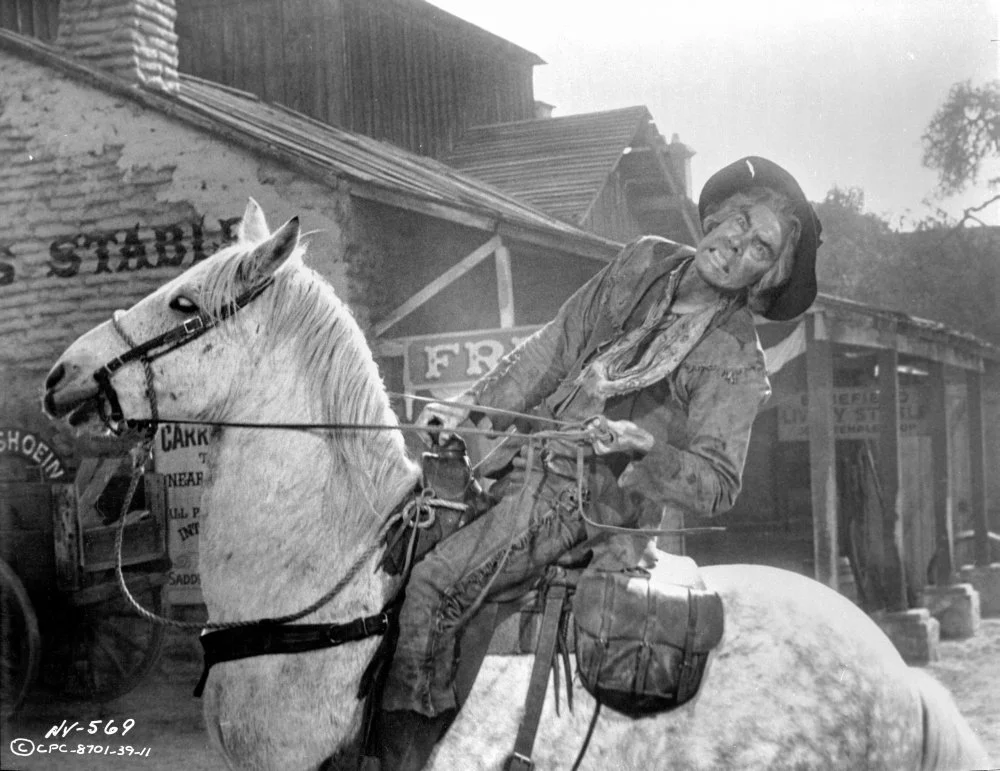
The equine performer was specifically trained to:
- Lean against walls on command
- Maintain an unsteady, wobbly stance
- Keep eyes half-closed for maximum comedic effect
- Hold position while appearing completely inebriated
Achieving this level of performance required expert animal training, countless repetitions, and unwavering positive reinforcement. Horses are incredibly intelligent creatures, but getting one to convincingly portray intoxication? That’s next-level horsemanship and patience.
Marvin’s Deep Respect for His Four-Legged Co-Star
In interviews following the film’s release, Lee Marvin frequently praised his equine partner, calling it one of the finest actors he’d ever worked with—and he wasn’t being modest. He genuinely admired the horse’s discipline, intelligence, and ability to perform under pressure. While the horse’s name may have faded from popular memory over the decades, its contribution to cinema history remains undeniable.
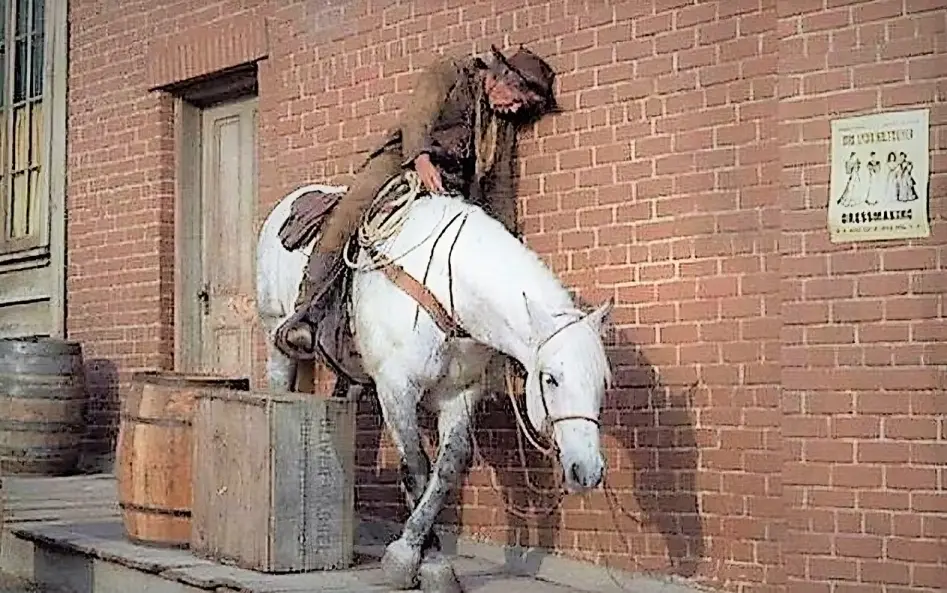
What made this performance even more impressive: no mechanical assistance, no visual effects wizardry. Everything you see on screen resulted from natural movements, expert training, and the bond between trainer and animal. That’s pure filmmaking craft.
A Legacy That Still Delights
The “drunken horse” moment became a watershed moment in cinema, proving that animals could be just as expressive and essential to storytelling as any human actor. Lee Marvin’s impeccable comedic timing combined with the horse’s flawless execution created pure movie magic—the kind that transcends decades.
Though Marvin famously played both Kid Shelleen and his villainous twin brother in the film, it was his partnership with that remarkable horse that truly stole every scene they shared. Even now, nearly 60 years later, this moment stands as a shining example of what great animal training, brilliant acting, and creative filmmaking can achieve together.
For horse lovers and cinema enthusiasts alike, the drunken horse in Cat Ballou remains a testament to the extraordinary talents of equine performers and the timeless appeal of a truly great scene.