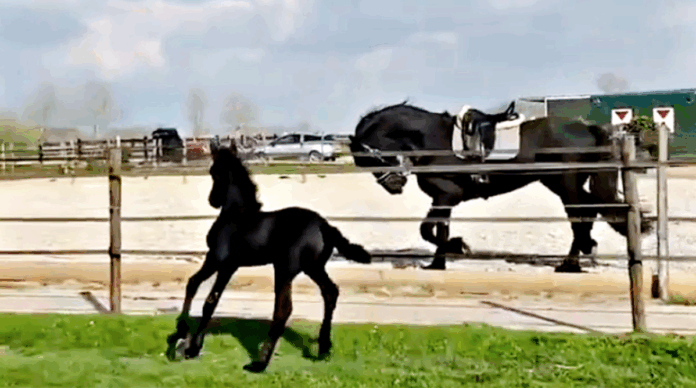

Is this adorable foal the next dressage superstar? Watch the video below and judge for yourself! What we’re seeing here is genuinely impressive—a young horse displaying the elegance, confidence, and natural movement that get trainers excited about future prospects.
What Makes a Great Dressage Horse?
Even at this young age, you can spot the hallmarks of a quality dressage prospect. This foal already demonstrates several key traits that professionals look for:
- Elegant carriage: Notice the straight, confident head position and overall poise
- Natural balance: The foal moves with symmetry and proportion through all gaits
- Body conformation: The front, rear, and hindquarters appear well-proportioned—essential for the “uphill” appearance dressage judges love
- Fluid movement: Each step shows grace and power, qualities that are often born into a horse rather than taught
Size matters too! The overall frame and proportions of a dressage horse directly affect gait quality, balance, and rideability. A well-built prospect like this one has the physical foundation necessary for advanced training.
That Special Spark
But here’s the thing about truly exceptional dressage horses—they have presence. That intangible quality that makes you notice them immediately. This young horse has it. Beyond the correct conformation and natural movement, there’s a confidence and willingness that suggests genuine potential.
Dressage is arguably the most demanding discipline in equestrian sport. It requires precision, collection, transitions between gaits, lateral movements, and complete attentiveness to the rider’s aids. Horses competing at the highest levels must be incredibly athletic, highly trainable, and genuinely willing partners.
Building a Dressage Champion
Developing a dressage horse is a methodical process that typically follows these stages:
- Foundation: Establishing solid walk, trot, and canter with rhythm and relaxation
- Intermediate skills: Introducing transitions and lateral movements
- Advanced training: Perfecting collection, extension, and complex movements
Of course, success depends on more than just the horse. The rider’s skill level, training methodology, and the horse’s individual personality all play crucial roles. But when a youngster like this one shows natural talent combined with the right temperament, that’s when exciting things happen.
Beyond competition, dressage training improves any horse’s athleticism, flexibility, balance, and obedience—benefits that transfer to everyday riding and performance in other disciplines too.
What Do You Think?
Does this foal have what it takes to become a future dressage champion? We’d love to hear your thoughts! Share your predictions in the comments below, and don’t forget to tag a fellow dressage enthusiast who needs to see this promising young prospect.