
Ever wondered where your horse truly stands in the genetic family tree? Swiss and Austrian researchers have developed a fascinating answer—one that’s revolutionizing how we understand equine genetics and improve breeding practices worldwide.
Imagine placing your horse on a two-dimensional genetic map where his full brother sits practically on top of him, his paternal grandmother a short distance away, and breed mates cluster nearby. Horses from completely different origins? They’d be scattered far across the map. It’s not just an interesting visual exercise—it’s powerful science that’s transforming breeding programs and conservation efforts.
Mapping the Equine Genome
Dr. Markus Neuditschko of the Agroscope national agricultural research center and Swiss National Stud explains the breakthrough: “With new technology, we can map not only the entire genome of a horse but that of multiple horses and then place all that data on a physical map to have a novel way of seeing the way horses are genetically related to each other.”
To demonstrate this cutting-edge approach, Neuditschko and his team analyzed the genomes of 531 horses across multiple breeds. Using an advanced data analysis system called homozygosity run detection, they identified distinct similarities and differences within the population. Each horse received a dot on their four-quadrant genetic map, creating a visual representation of equine genetic relationships.
What the Genetic Map Reveals
The results were revealing. The team discovered distinct clusters representing individual breeds—confirming genetic similarities within breed groups. More interestingly, they could observe how different breeds relate to each other. Arabians and Shagya Arabians clustered closely together, while Haflingers and Bosnian Mountain horses remained at greater distances.
Within breed clusters, subclusters sometimes appeared, representing breed subcategories. Imagine mapping Quarter Horses—you’d likely see performance horses clustering separately from halter horses, each maintaining their distinct genetic profile while remaining part of the broader breed.
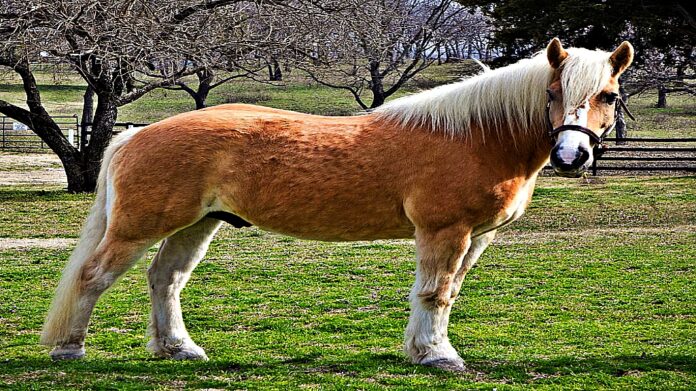
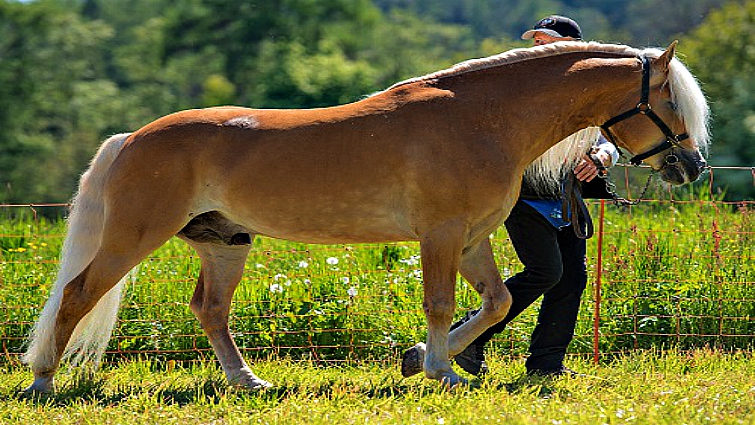
One fascinating discovery involved Haflingers. The Austrian-bred and Italian-bred populations showed distinct genetic differences, suggesting separate breeding histories and emphasis despite sharing the same breed standard.
Preventing Inbreeding & Preserving Genetic Health
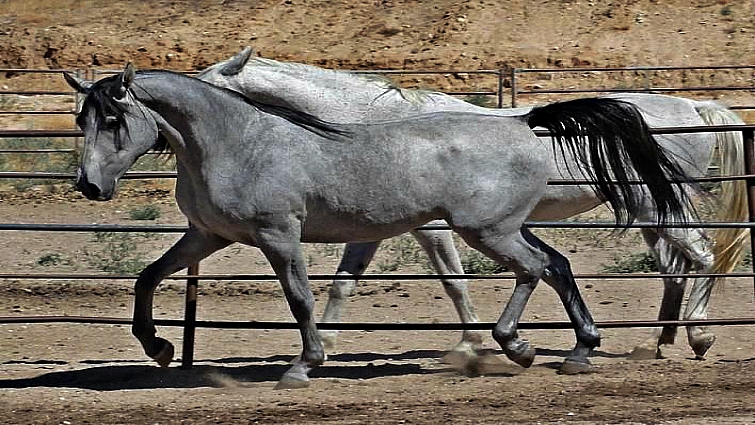
Perhaps most valuable is the map’s ability to reveal inbreeding patterns. Family members’ dots visually overlap on the map, making probable inbreeding immediately apparent. This visual evidence helps breeders make informed decisions to prevent continuing troublesome genetic trends within families.
The research showed that Austrian Haflingers and Norikers maintained the lowest inbreeding rates—a positive sign for these populations’ long-term genetic health.
Genetic “Pollution” and Breed Conservation
The mapping also revealed genetic “pollution”—the presence of genes showing influence from other breeds. As Dr. Neuditschko explains: “Sometimes people have attempted to save breeds from small numbers by bringing in similar breeds to breed in. But obviously these are not pure-blood animals of that breed, and that’s visible on the map.”
This visibility is crucial for conservation efforts. When protecting endangered breeds, genetic maps allow scientists to identify individuals with excessive foreign breed influence and make strategic breeding decisions that maintain genetic integrity while preserving population numbers.
The Future of Equine Breeding
This genetic mapping technology represents a paradigm shift in equine breeding. By understanding where each horse “lives” on the genetic map, breeders can:
- Make more informed breeding decisions that strengthen bloodlines
- Prevent unintended inbreeding and genetic problems
- Preserve endangered breeds with scientific precision
- Maintain breed integrity while managing small populations
- Understand breed relationships and historical influences
For horse lovers passionate about breeding, conservation, and equine genetics, this technology offers hope. As research continues, genetic mapping promises to help us breed healthier, stronger horses while preserving the incredible diversity of breeds we cherish. The future of equestrian genetics is mapped—quite literally—and it looks brighter than ever.