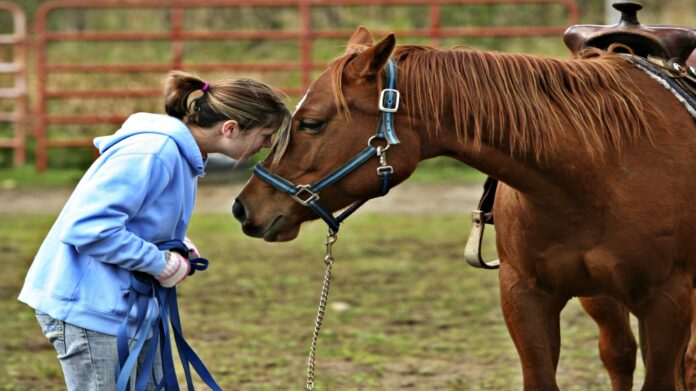

If you’ve ever wondered whether your horse can sense your mood before you even step into the barn, science now has an answer for you: they absolutely can. Every passionate horse lover intuitively knows that these magnificent animals communicate through body language and facial expressions, but a fascinating new study confirms what we’ve long suspected—horses are incredibly attuned to human emotions.
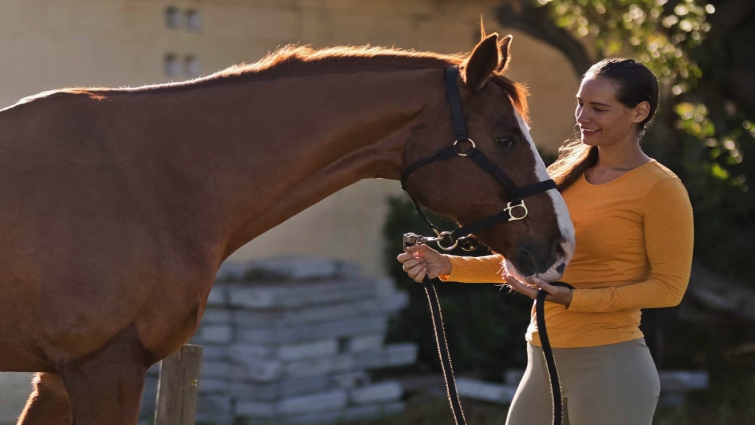
Horses: The Ultimate Emotional Sponges
“Horses are really emotional sponges, and they react vigorously and very quickly to our human emotions,” explains Léa Lansade, Ph.D., a behavior scientist at the French Horse and Riding Institute and the National Institute for Agricultural Research in Tours. This insight perfectly captures what equestrians have observed for centuries: the deep emotional connection between horses and humans.
Lansade and her research team designed a clever study to test whether horses could simultaneously process human facial expressions and vocal emotions. The experiment involved 34 Welsh mares—the perfect subjects for understanding how horses interpret human feelings.
How the Study Worked
The research team showed video clips of an unfamiliar woman’s face on either side of each horse. In one video, the woman displayed an angry expression; in the other, she showed a happy, friendly face. Simultaneously, the researchers played audio recordings of another unknown woman vocalizing different emotions through nonverbal sounds—angry growls like “grrr” versus happy exclamations like “aah.”
The Remarkable Results
The findings were striking and conclusive: horses can distinguish between positive and negative human emotions. When the mares heard angry vocalizations, their heart rates increased dramatically and their body language shifted noticeably. Their postures became rigid and alert—classic signs of stress and heightened awareness.
What’s particularly fascinating is that the horses responded this way even to emotions that had nothing to do with them. The facial expressions and voices weren’t directed at the animals, yet they still picked up on the emotional cues. This reveals something profound about equine psychology: horses don’t just react to emotions aimed at them—they’re sensitive to the emotional atmosphere around them, period.
What This Means for Horse Owners and Riders
If you’re working with horses—whether you’re training, competing, or simply enjoying a ride—this research has important implications. Your emotional state directly influences your horse’s behavior and performance. Stressed? Your horse knows. Anxious about that competition? Your horse can feel it. Calm and confident? Your horse will sense that too.
This understanding deepens our responsibility as horsekeepers and riders. Before you approach your horse, consider taking a moment to center yourself emotionally. Your horse will thank you with better focus, improved responsiveness, and a more harmonious partnership.
The Bigger Picture
This study adds to our growing scientific understanding of how horses communicate and interpret the world around them. It confirms the centuries-old wisdom of experienced horsemen and horsewomen who’ve always known that horsemanship is as much about emotional intelligence as it is about technique.
The next time you’re at the barn, remember: you’re not just interacting with an intelligent animal. You’re connecting with an emotionally perceptive creature that mirrors your feelings back to you. That’s the beautiful, complex bond that makes horses such special partners in sport and life.